16 Basic Desires: China versus US

16 Types of Motivation and Culture Table Resized

16 Basic Desires  

I have been teaching in Asia at the college level for the last sixteen years. This semester just like every semester I reflected that my Thai students have very different motivations than other students I have had including American and Chinese students. I didn’t really find anything on the internet that was useful directly but I did run into one general theory of motivation that I think is detailed enough to be useful in the classroom and with adaptation the English as a foreign language (EFL) classroom.

Professor Steven Reiss has proposed a theory that found 16 basic desires that guide nearly all human behavior. The focus of research on motivation in the ESL classroom is on intrinsic vs extrinsic motivation.   Lile provides a good overview of the application of intrinsic vs extrinsic motivation in the classroom as well as some practical suggestions.

My observation is that most American teachers in Asia tend to think that Americans have more intrinsic motivation and Asians have more extrinsic motivation.  In language terms this is framed as integrative motivation (intrinsic) versus instrumental motivation(extrinsic). I might agree that Asians study English because this subject can lead to career advancement when they graduate but I think the picture is actually much more complex.

Below are the 16 basic desires listed by Reiss and I would like to suggest that there are consistent cross-cultural differences. My analysis is informal, subjective and speculative but based upon more than 20 years living in nine different countries. This is a post on my personal blog not a research article! Perhaps my blog post will MOTIVATE a researcher to follow up with empirical research that can be published in a peer reviewed research journal.

I am American. I lived in China for one year and Taiwan for seven years so I do have some familiarity with Chinese culture. In my opinion Chinese and Taiwanese are only slightly different in the area of motivation. Chinese/Taiwanese on the other hand as a group are very different from Americans. Below is a table comparing the US and China using Hofstede’s Dimensions.
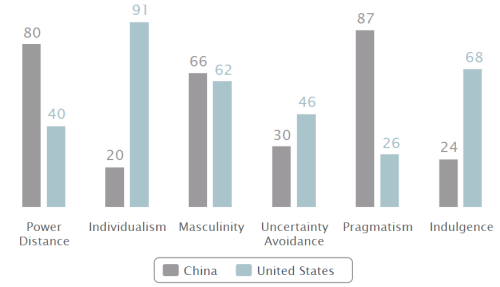
Hofstede US vs China

I have five years of teaching Americans at the secondary level and ten years of experience teaching Americans at the college level. Below is a record of my thoughts followed by a table that provides a synopsis of my analysis.

Acceptance – The need for approval

The US scores higher on Hofstede’s individualism score than China so probably acceptance is a higher motivation in China than the US. Many Chinese universities do have an official class leader. I have found that choosing one or two students to be class leaders when this formal mechanism is not present does seem to motivate the top students and I think most Americans would find this practice elitist and at odds with their egalitarian sensibilities.

Curiosity – The need to learn

Americans are perhaps the most curious people I have ever lived with. Curiosity is almost a defining characteristic of Americans. As a teacher who has taught in American and Chinese settings I have had to adapt my teaching style by relying less on curiosity as a the motivating factor in my lessons. However, Chinese, based purely on my experience, are more curious than perhaps Thai students, who I have taught for over six years. There are ethnographic studies that show American students are very active in the classroom compared to their Asian counterparts. Inductive lessons seem to work better with Americans since inductive lessons rely heavily on curiosity.

Eating – The need for food

I would say food is a more central part of Chinese culture than American culture but this is a very subjective view. At the college level, students are much more likely to take their respected university American teacher out to dinner in China. Conversely, rewarding your top students with a dinner at a restaurant can instill an incredible amount of loyalty among your Chinese students. This practice might seem a little elitist to many Americans but is not unheard of in the US.

Family – The need to raise children

Again as a measurably more collectivist culture, China is generally presumed to view family as being more important than Americans. At the practical level this means Chinese students may miss class because of family obligations. Chinese parents can and do order their adult college students to attend family functions. For example, my Chinese students studying in Thailand can be told by their parents that they need to go home for Chinese New Year. Officially Chinese New Year is not a holiday in Thailand. An American teacher should reflect that giving a Chinese student more leeway in this area than an American student might be a positive cultural adaptation on the part of the teacher that will instill more loyalty in the students in the long run.

Honor – The need to be loyal to the traditional values of one’s clan/ethnic group

As defined above, China clearly values honor more than Americans. American is a multi-cultural country and even defining “American” values is difficult. However, there are some transcultural values such as a commitment to democracy that are very strong in Americans. Criticizing your host country in class is a bad idea anywhere but is probably an even worse idea in China. Discussion of the Three Ts (Taiwan, Tibet, and Tiananmen) in China in an inappropriate manner can lead to your quick dismissal from your teaching post.

Idealism – The need for social justice

Americans have a very strong commitment to democracy and that includes strong views about social justice including a strong commitment to equality under the law, privacy, and the rights of the individual overall. Discussions about politics may lead to dead silence in your college class in China. There may be less interest in the topic and of course the students may correctly assume this is a topic that can get everyone involved into trouble.   As mentioned, the three T’s, Tiananmen, Tibet and Taiwan are probably best avoided in classroom discussions in China. This is the one area in which Taiwan is very different. You have a much, much more freedom to discuss politics in Taiwan but I would say once again this might be a topic Taiwanese are not all that interested in compared to Americans.

Independence – The need for individuality

As measured by Hoftstede, the US is much more individualistic than China. Autonomy is a large goal for many Americans at work and in life. I think my biggest surprise in Asia has been that many college students are studying majors their parents want them to rather than majors they want to study. Asian students do seem less willing to share class work alone and would rather share work with the class with a group or a classmate. Having a student read their paper alone in front of the class might actually be perceived as punishment by many Chinese students.

Order – The need for organized, stable, predictable environments

There is a lot of overlap between this concept and Hofstede’s concept of uncertainty avoidance. China scores higher on uncertainty avoidance. Chinese might prefer a more predictable environment than US students.

Physical activity – The need for exercise

I don’t perceive a lot of difference between American and Chinese students in this area. Chinese universities sometimes have a physical education requirement that is not present in American universities. However, both countries suffer from rising obesity albeit the US more so than China for now.

Power – The need for influence of will.

Hofstede’s power distance dimension applies to this area directly. There is much higher power distance teachers and students in a Chinese classroom than in an American classroom. I do think Chinese students will be less comfortable with extracurricular activities without strong teacher supervision and certainly the Chinese system will not allow them a much freedom as in the US. However, that doesn’t mean the Chinese students don’t want more power over their lives. Chinese in a work setting do seem to be willing to go to great lengths to achieve more power.

Romance – The need for sex and for beauty

Maybe a long time ago China was less driven by consumerism and the message that everyone should be sexy and beautiful. I think nowadays both countries put a premium on romantic needs as part of a successful life.

Saving – The need to collect

Chinese have a higher uncertainty avoidance index and a tradition of saving more income than Americans.

Social contact – The need for friends (peer relationships)

China is less individualistic than the US and peer relationships are much more important than in the US.

Social status – The need for social standing/importance

Both Chinese and Americans put a premium on social standing. I would say this is something that both countries have in common.

Tranquility – The need to be safe

Again, China has a higher uncertainty avoidance score so a desire for tranquility is probably higher among Chinese students than American students.

Vengeance – The need to strike back and to compete

There is a Chinese legalistic tradition that favors harsh punishment in order to maintain social harmony. In theory harsh punishment is not about revenge but historically this has not always been the case. The US probably emphasizes due process more than any other country in the world and certainly more so than China! Due process does make using the system to exact revenge using state resources more difficult regardless of motivation.

Links

https://www.psychologytoday.com/blog/curious/201407/16-ways-motivate-anyone

https://en.wikipedia.org/wiki/Motivation#Intrinsic_motivation_and_the_16_basic_desires_theory

Document at:

My Articles About China and/or Chinese Culture

16 Basic Desires: China versus US

35 Accomplishments of Modern China

36 Stratagems

Acronym for Eight Types of Chinese Regional Cuisine

American versus Chinese Culture

American versus Chinese Culture

Astrology Chinese

Chinese Astrological Analysis of Nations

Chinese Astrology 60 Year Cycle

Chinese Do’s and Don’ts

Chinese Dream and American Reality

Chinese vs. Western Astrology

Confucius in Thailand 2012

Extending China’s One Belt One Road Initiative to Latin America

Table of Chinese Astrology 19th – 21st Century

The 36 Stratagems as Portrayed in Comic Books

Virtual Chinese Reunification Palace

Am I Kitsune

WereVerse Universe Baby!

Google Drive Link: WereVerse Universe
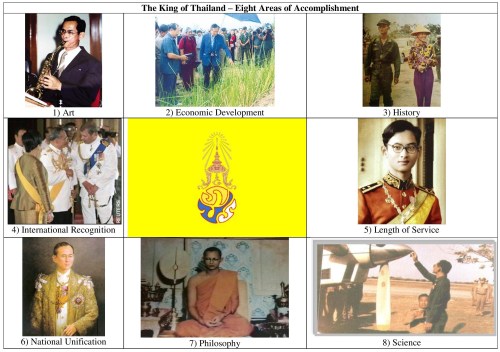
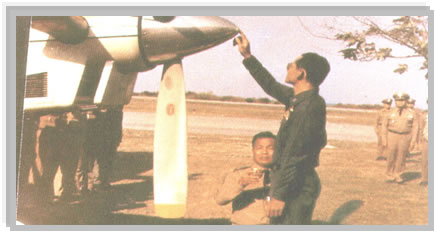
The King of Thailand – Eight Areas of Accomplishment

King of Thailand Eight Areas of Accomplishment

This article was published on December 5th 2015 which is the 88th Birthday of the King of Thailand.  The King of Thailand has accomplished great things in eight areas, organized alphabetically, including (1) art, (2) economic development, (3) history, (4) international recognition (5) length of service, (6) national unification, (7) philosophy and (8) science:

1) The King is a man of many skills in the arts, including jazz, musical composition, and writing.

1King of Thailand - Art

2) The royal development projects have helped countless Thais economically in many areas including crop substitution, distance learning, drought and flood alleviation, farming, irrigation, and public health.

2King of Thailand - Economic Development

3) The King of Thailand is the main reason that Thailand historically has been stable while communist strife cursed its neighbors including Laos, Cambodia and Vietnam.

3King of Thailand - History

4) The King has received international recognition. The King has been given over 30 foreign honors, over 40 international awards and over 30 international academic degrees.

4King of Thailand - International Recognition

5) King Bhumibol Adulyadej has served the Thai nation tirelessly and unselfishly since 1946. The Kling of Thailand is the world’s longest-serving head of state.

5King of Thailand - Length of Service

6) The King of Thailand has been a symbol and touchstone of Thailand that has created a nation that is united. As a symbol of unity, the King has protected Thailand from external enemies and internal strife!

6King of Thailand - National Unity

7) The King is a philosopher that has promoted the idea of a sufficiency economy. In an era of mindless and ecologically destructive consumerism, the promotion of a sufficiency economy is a welcome choice for national development. The Thai people love their King in a way that I think is difficult for foreigners to understand.

7King of Thailand - Philosopher

8) The King is also skilled in the sciences and has numerous patents including patents for rain making.

8King of Thailand - Science

Handout at:

Thai Links

000 Spanish Syllables Thai Version

001a Spanish Basic Phrases Thai Version

001b Spanish Basic Phrases Thai Version

003 Spanish Alphabet Thai Version

008 Spanish Numbers Ordinals Thai Version

17 Types of Thai Smiles

A Great Statue to Honor a Great Man

American versus Thai Culture

Pay for the Thai Canal with an Island Next to Bangkok!

Thai Colors of the Day

Thai Nicknames and their Meanings

Thailand Do’s and Don’ts

The King of Thailand – Eight Areas of Accomplishment

WereVerse Universe Baby!

Google Drive Link: WereVerse Universe

Ten Types of Literary Conflict Table

Ten Types of Conflict Table

Introduction

Aristotle posited four types of conflict. Three types were external including man versus man, man versus nature and man versus society. Aristotle treated internal conflict as a category in its own right and this internal conflict is generally labeled as man versus self. This is an attempt to revamp Aristotle’s thesis and suggest there are actually five major conflictual topics and each topic can have an external versus internal perspective.

1) Man versus machine (external) – Character is in a struggle against a robot and/or computer. The Terminator franchise and the comic book hero Magnus, Robot Hunter would be examples of this type of conflict.

2) Man versus machine (internal) – The character is a cyborg and struggles to maintain a human identity despite the computer implants in their brain. Deathlok and the Robocop franchise are both examples of this type of struggle. The converse version of this type of conflict is a robot that strives to be human. Data of Star Trek would be an example of this type of struggle.

3) Man versus man (external) – The character struggles against another character or characters. A common subset is good versus evil. Batman versus the Joker would be an example of this sort of struggle. The struggle may have psychological accents but is mostly physical.

4) Man versus man (internal) – The struggle between the characters is not physical but psychological. A good example of this sort of struggle is Who’s Afraid of Virginia Wolf by Edward Albee.  Commonly a character has a psychological problem that causes conflict with the other characters this problem can be alcoholism, neurosis, a personality disorder, or even a character flaw. The conflict is internal but the audience see’s the manifestation of the internal struggle via the effect of this conflict on other characters. Watching an alcoholic talking to himself in a room is a lot less fun to watch than watching an alcoholic at his birthday party.

5) Man versus nature (external) – The character struggle against the forces of nature. The Old Man and the Sea is an example of this sort of struggle.

6) Man versus nature (internal) – The character struggles with the animal within. The protagonist of The Walking Dead, Rick Grimes must inevitably follow the dictates of social Darwinism in order to survive. There is an animal inside man and in the struggle with nature this animal may have to be unleashed for us to survive. Some Vampires may want to control their thirst for blood but the animal within is too strong. The humanity of the vampire in conflict with the vampiric urges of the vampire seems to be a recurring conflict in the works of Anne Rice and this is especially true in the case of her character Louis de Pointe du Lac.

7) Man versus society (external) – The character struggles against an authoritarian system physically (The Hunger Games).

8) Man versus society (internal) – The character resists the socialization, institutionalization, seduction or even brainwashing of an authoritarian system. Joker in Heavy Metal Jacket takes part of collective punishment to Pyle and becomes part of the system he had previously derided. Chief accepts the system in One Flew Over the Cuckoo’s Nest. Chief is huge yet chooses not to talk because his shackles are internal not external. The character struggles not to become institutionalized or socialized but the struggle may in turn make the character more ruthless and similar to those in the system.

The external struggle against society and the internal struggle are juxtaposed in the theme that “He who fights dragons becomes a dragon”. In Star Wars the empire provides external conflict. The Sith Lords provide external conflict with light saber duels but more importantly the Sith Lords endeavor to create anger in the Jedi and cause them to fall to the Dark Side.

9) Man versus universe (external) – The character is in a struggle against cosmic level forces such as the supernatural (The Shining), fate (Slaughterhouse Five) or even God (A Canticle for Leibowitz). Lovecraftian horror is also an example of this type of struggle but the struggle has a large internal dimension. The most common version of this cosmic level struggle is actually not with God but with the Devil in deals with the devil stories. Man is hopelessly outmatched in terms of power in this type of struggle and cannot win via power but must rely on his wits and/or luck.

The realization that the universe is absurd is generally treated as an existential crisis that falls under is (5) man versus self. However, in some cases the universe is absurd due to an external cosmic level change. The very nature of reality has altered due to unknown and often unknowable mechanisms. The TV show The Twilight Zone specialized in this type of man versus universe scenario. In the very first episode of The Twilight Zone, Where is Everybody?, a man finds himself alone in a town. All the people have mysteriously disappeared. Rod Serling, the writer bothers to come up with an “explanation” of why there are no people in this episode but in other episodes the universe has changed and no explanation is given and this is much more disturbing. In The Twilight Zone episode, And When the Sky Was Opened, astronauts start being erased from existence one by one and no real explanation is given and this lack of explanation makes the episode all the more disturbing.

Perhaps this is why zombie stories are so disturbing. One level of conflict in a zombie story is man versus man in that the protagonist must fight other humans in the struggle for resources but also must deal with the fact that the impossible has happened. Our scientific world view precludes the existence of zombies but the character must deal with a universe gone mad and this struggle is perhaps more disturbing than the struggle with zombies. If zombies are explained using a disease model as in the case of The Walking Dead then a cure might exist. However, George A. Romero realized that living dead that exist as an ontological puzzle are much more disturbing than a voodoo based or science based zombie. In Day of the Dead, Romero explores the ontological puzzle of living dead in more detail. Is the fabric of reality a fragile thing that can suddenly change? We like to think this is not the case but when the Aztecs fought the Spanish they also fought a change in their world view that perhaps was more harmful in the long run.

10) Man versus universe (internal) – The protagonist struggles with madness but the madness is so pervasive that he or she cannot tell what is real or not real. The Aviator would be an example of this type of conflict.

You can also download my autobiography of my struggle with a bipolar condition on  Am I Kitsune on my Google Drive.

WereVerse Universe Baby!

Google Drive Link: WereVerse Universe

Ten Common Themes

Ten Common Themes Table

1) Adversity leads to personal growth – Adversity may lead to the loss of wealth and status but lead to inner growth that would not have happened otherwise.

2) Crime does not pay – No matter how smart a criminal is the perfect crime is impossible. This may not necessarily be due to a hero but due to accidents, lack of honor among thieves and internal flaws that are part of being a criminal.

3) Death is part of the life – Literary works with this theme show how death and life and intricately connected.

4) Family comes first – Family is more important than wealth, career advancement, personal happiness, nationalism and/or other important things.

5) Good always triumphs over evil – The good guy always wins no matter what resources the villain has at his or her disposal.

6) Love conquers all – Love conquers all despite economic circumstances, geography, family objections and other obstacles.

7) Relationships requires sacrifice – This is the idea that you can’t have friends if you don’t act like a friend.

8) Revenge is poison – Revenge ultimately destroys the person who pursues revenge.

9) Sacrifices brings reward – Sacrifices and hard work pay off in the end, despite the challenges along the way.

10) Truth and happiness are not the same thing – Sometimes you have to choose between the truth and happiness. Oedipus finds out the truth about his father and mother but at the expense of his happiness.

Handout at:

You can also download my autobiography of my struggle with a bipolar condition on  Am I Kitsune on my Google Drive.

WereVerse Universe Baby!

Google Drive Link: WereVerse Universe

Image

Long Live Her Majesty Queen Sirikit

Queen Sirikit Mother's Day 2015

WereVerse Universe Baby!

Google Drive Link: WereVerse Universe

Parrot Joke

Parrot Joke 1-Captioned Parrot Joke 2 Captioned

Hugh Fox III - 3D Outline Orange

You can also download my autobiography of my struggle with a bipolar condition on  Am I Kitsune on my Google Drive.

WereVerse Universe Baby!

Google Drive Link: WereVerse Universe

PDF Converter Elite 4 Software Review

PDF Converter Elite 4

As blog content provider I often need to convert files to a blog accessible format. In particular I sometimes need to convert PDF files into text files. I generally use free online PDF file converters but have run into one software package that does a better job than the free online converters and is worth a little extra money. PDF Converter Elite has three main advantages including ease of use, speed and versatility.

EASE OF USE

I generally skip documentation and just try to figure out the software on my hand. Good software should be intuitive enough that you can do this. PDF Converter Elite is super easy to use and I was able to figure out what to do in under five minutes. Most jobs can be done with four clicks on easy to understand icons.

SPEED

Online sites are generally slower than installed software packages.   Free is good but fast is also important. PDF Converter Elite was able to convert extremely large PDF files very quickly. I converted a 100 page plus document in seconds.

VERSATILITY

PDF Converter Elite converts a wide variety of files including: Word, Excel, PowerPoint, Publisher, Image, HTML, AutoCAD (.dwg, .dxf) and OpenOffice.

CONCLUSION

PDF Converter Elite is not perfect and I still needed to tweak the text converted from a PDF file. You end up with a lot of tabs that you don’t want when you convert PDF to text but this problem was lot less prevalent than with online sites I have used before. Overall, I would say this software is good value for the money.

The product can be bought at:

http://www.pdfconverter.com/products/

Hugh Fox III - Alpine

You can also download my autobiography of my struggle with a bipolar condition on  Am I Kitsune on my Google Drive.

WereVerse Universe Baby!

Google Drive Link: WereVerse Universe
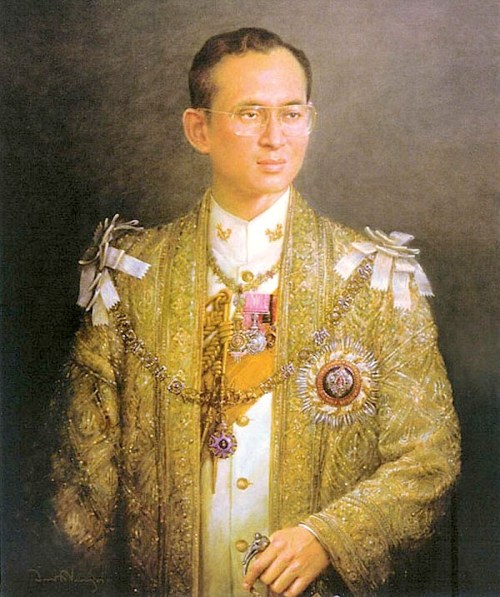
Lucia Fox Lockert March 29, 1928 – June 9, 2015

Lucia Fox Lockert March 29, 1928 – June 9, 2015

http://atomic-temporary-3328128.wpcomstaging.com/about-me/my-mothers-story/


Image

M1 Abrams vs. Armata Architecture

M1 Abrams vs Armata-page-001

Hugh Fox III - 3D Outline Tangerine

You can also download my autobiography of my struggle with a bipolar condition on  Am I Kitsune on my Google Drive.

WereVerse Universe Baby!

Google Drive Link: WereVerse Universe

Advertising Techniques Classified by Modes of Persuasion

Advertising Techniques Classified by Modes of Persuasion Table

This article is attempting to establish a relationship between the three modes of persuasion and particular advertising techniques. Ethos is an appeal to authority.  Logos is an appeal to logic. Pathos is an appeal to emotion.  I have added a fourth category, media, because some advertising techniques don’t really fit the modes of persuasion but are media centric.  Marshall McLuhan has argued that “the medium is the message”.  Ancient Greece had limited types of media and would find this category confusing but media technique is increasingly important as part of the art of persuasion since the 20th century.

1) Altruism – The ad presents an altruistic story and hopes the viewer associates the story with the product and/or service.  The ad ultimately evokes emotions and is therefore a type of pathos.

2) Analogy – A similarity between like features of two things, on which a comparison may be based.  This is a type of logical argument and therefore logos.

3) Arouse Curiosity – The ad catches the curiosity and therefore the attention of the customer.  Curiosity is a feeling and therefore a type of pathos.

4) Bandwagon – Trying to convince viewers that a product is good because “everyone” is buying it; encouraging people to “jump on the bandwagon”.  The people are the authority and therefore this is an example of ethos.

5) Card Stacking – Telling the facts from one side only.  This is a manipulation of the logic of the argument and therefore logos.

6) Cartoon Character – An animated character that promotes a product.  This is a good example of a media that did not even exist in Ancient Greece.  This is a mass media technique.

7) Children – In most houses, children have a say in every big or small purchase made. Most parents just give in to the tantrums, a fact well known to the advertisers. Out of ten commercials one sees through any medium, 8 have children featured in them who are generally a little more perfect than the target audience. These perfect children then go on to become role-models that have to emulated by other children.  I think this is an example in which the same commercial persuades the parents using emotion i.e. pathos.  However, there may be an ethos effect on the children watching the advertisement.  Finally, in the very beginning of film the fact that children look good on film was noticed i.e. this is a mass media issue.

8) Comparison Appeal – This brand is better than other brands of the same product.  A taste test between Pepsi and Coca Cola would be ethos.  Comparing the products using facts and figures would be logos.

9) Deal Appeal – This technique involves making the audience a compelling offer, and telling them exactly how to get it. Key words associated with this technique are “free” and “save”.  Saving money is logical but these types of ads often involved a lot of titillation i.e. pathos.

10) Emotional Appeal – Writers may appeal to fear, anger or joy to sway their readers. They may also add climax or excitement. This technique is strongly connected to the essay’s mood.  Emotional appeal is the modern way to refer to pathos.

11) Establish Credibility – “I have the honor of serving as president of the Southern Christian Leadership Conference, an organization operating in every southern state, with headquarters in Atlanta, Georgia.”  Appeal to authority and therefore ethos.

12) Exaggeration – Exaggerating products and their uses is another of the good advertising techniques and examples of the technique can explain how this works in the favor of the advertiser. Exaggeration of facts and figures is logos.  Exaggeration the appeal of the products to a peer product is ethos.

13) Exigency – Creating the impression that your action is required immediately or your opportunity will be lost forever.   A good combination of appealing to both logic and emotion and a reason this technique works.  Acting quickly before an opportunity is lost is logical and our emotions also kick in.

14) Facts and Figures – Statistics and objective factual information is used to prove the superiority of the product.  Statistics are the modern version of logic so this technique is logos.

15) Fantasy – Super athletes, superheroes, movie stars, the beautiful, the rich, the powerful, or things associated with them are featured with the hope that the consumer will tend to transfer the qualities of these people to the products and themselves and buy the item.  Fantasy is an emotional experience but I think there is also an element of ethos in that superheroes and movie stars are beings we aspire to be.

16) Fear – Using fear to sell a service and/or product.  This is the dark side of pathos.

17) Green – If you buy this product then you are helping the environment.  The ad can go to in a feel good direction and therefore pathos.  The ad might also be logical in that a dead world means yours truly is also dead.

18) Glittering Generalities – An emotionally appealing phrase so closely associated with highly valued concepts and beliefs that it carries conviction without supporting information or reason.  An appeal to emotion but can also be an appeal to authority depending on the ad.

19) Humor – The use of humor may help people remember the ad and want to buy the product because of the positive association with it.

20) Hyperbole – This is one of the more enjoyable persuasive techniques. It involves completely overstating and exaggerating your point for effect. (Like when your mom says, “I must have asked you a million times to clean your room!” Get it?).  The effect is ultimately emotional and therefore pathos.

21) Image Advertising–  Presenting a desirable situation or lifestyle in order to convince the viewers that if they use a product, they, too can have this lifestyle; beautiful people.

22) Innuendo – Causing the audience to become wary or suspicious of a competing product and/or service by hinting that negative information may be being kept secret.  Suspicion is an emotion so this is an example of pathos.

23) Irony – Irony is present if the writer’s words contain more than one meaning. This may be in the form of sarcasm, gentle irony, or a pun (play on words). It can be used to add humor or to emphasize an implied meaning under the surface. The writer’s “voice” becomes important here.  Humor is appeals to emotion therefore this is an example of pathos.

24) Jingle or Slogan – A “catchy” song or phrase that helps you remember a product.  A song or jingle is the use of media to get attention.

25) Lifestyle Appeal – In this technique, an advertisement provides a glimpse from a particular lifestyle or way of living.  The hope is that the audience will desire this lifestyle and transfer that longing to the product.  This is an example of ethos.

26) Magic Ingredients – The suggestion that some almost miraculous discovery makes the product exceptionally effective.  Ultimately this is a logical argument even if the argument is fallacious.

27) Mascot – Mascot the audience can identify with like Smokey the Bear.  A costumed character is ultimately a type of media that appeals to our emotions.

28) Metaphor – A figure of speech in which a term or phrase is applied to something to which it is not literally applicable in order to suggest a resemblance.  The metaphor may be an attempt to make a logical and/or emotional connection.  Therefore the metaphor could be logos and/or pathos.

29) Name Calling Appeal – In this technique, the advertiser compares its product or service to the competition in a way that is favorable to the advertiser.  This is the use of names that elicit emotion and therefore pathos.

30) Nostalgia – This appeal implies that this product takes you back to the “good old days” or back to nature, etc.  Nostalgia is ultimately emotional and therefore this is an example of pathos.

31) Parallelism – When an author creates a “balanced” sentence by re-using the same word structure, this is called parallelism. Always strive for parallelism when using compound or complex sentences.  Jingles and/or slogans can be improved using parallelism.  A jingle/slogan is media and an improvement on media is a media issue.

32) Patriotism – The suggestion that purchasing this product shows your love of your country.  Patriotism is an emotion so this is an example of pathos.

33) Personification – This technique gives human characteristics to a product, or service.  Novelty elicits positive feelings so this is an example of pathos but computer graphics mean this technique is used more effectively and perhaps more often.

34) Plain Folks – The product is not elitist and suitable for ordinary people.  This is an ethos argument.

35) Promise a Benefit – The ad promises a benefit to the consumer.  Does the benefit have emotional appeal?  Does the benefit make sense logically?  Will the benefit help you socially?  This technique can be slanted to be ethos, logos or pathos.

36) Red Herring – Highlighting a minor detail as a way to draw attention away from more important details or issues.  This is an appeal to logic i.e. using logic to mislead the viewer therefore logos.

37) Repetition – Repeating an element within one advertisement so that viewers will remember the advertisement and will buy the product.  Repetition is an important part of mass media in which ads are played again and again rather than a type of argument.

38) Reverse Psychology – A persuasion technique involving the false advocacy of a belief or behavior contrary to the belief or behavior which is actually being advocated.  This is a manipulation of both our logic and our emotion in tandem.

39) Rhetorical Question – Sometimes a writer will ask a question to which no answer is required. The writer implies that the answer is obvious; the reader has no choice but to agree with the writer’s point.  This is ultimately an appeal to logic so logos.

40) Savings or Free – You will save money or get something free if you buy this product.  Saving money is logical if the price aspect is emphasized but emotional if the thrill of the sale is emphasized.

41) Scale – A product looks bigger or smaller in the ad than the actual product.  This is a graphic design trick and therefore media.

42) Sensory Appeal – The product tastes good, looks good, or feels good.  Sounds or pictures appealing to the senses are featured.  This is generally done with video and is the use of this media to elicit very basic emotions and therefore pathos and media.

43) Shocking the Viewer – An effective method of advertising, shocking viewer gets them more interested in the product, because it is a shift in their comfort zone. Shock is an emotion therefore this is an example of pathos.

44) Simple Solutions – One product and/or service solves several problems at the same time.  Simple solutions are easy to understand logically therefore this is a type of logos argument.

45) Slice of Life Appeal – A problem is presented in a “realistic” manner by “real” people. The real people are an example of ethos.

46) Snob Appeal – The use of the product makes the customer part of an elite group with a luxurious and glamorous life style.  The elite group is an example of ethos.

47) Testimonial Appeal – In this technique, a celebrity or authority figure endorses the product.  This could be a celebrity, sports star, or “professional”.  Ethos yet again!

48) Transfer – Words and ideas with positive connotations are used to suggest that the positive qualities should be associated with the product and the user.  This is the use of the emotional impact of words and therefore pathos.

49) Weasel Words – “Weasel words” are used to suggest a positive meaning without actually really making any guarantee.  This is a sneakier version of word choice (50) and ultimately a manipulation of emotion and therefore pathos.

50) Word Choice – Is a person “slim” or “skinny”? Is an oil spill an “incident” or an “accident”?   This is a narrower version of transfer (48) and therefore still pathos.

Conclusion

There were 24 examples of pathos ad techniques.  There were 18 examples of ethos ad techniques.  There were 15 examples of logos ad techniques.   There were 9 examples of media techniques.  This means most ad techniques make an appeal to emotion.

Handout at:

Hugh Fox III - Amazing 3D

You can also download my autobiography of my struggle with a bipolar condition on  Am I Kitsune on my Google Drive.

WereVerse Universe Baby!

Google Drive Link: WereVerse Universe