Superman verbally renounces his US citizenship in Action #900 (The
Incident, pgs 70-78). Superman decides to show up at Azadi square in Tehran. Iranian pro-democracy protestors are in a face-off with Iranian security and Superman flies down and plants himself between the protestors and Iranian security. Iranian security does not fire on the protestors probably because of Superman’s presence. When Superman flies away after 24 hours, one of the protestors offers a rose to an Iranian policeman who has a rifle aimed at the protestor and the Iranian policeman lowers his weapon and accepts the flower.
This upsets the US government so much that a meeting with Superman is demanded Superman meets with a National Security advisor in a park. Superman spots a couple of US government snipers with rifles aimed at him and loaded with kryptonite bullets in winter cameo that he can spot anyway with his infrared vision. The National Security advisor tells Superman the snipers are there just in case because his actions have alarmed the US government. The story is interesting on several levels. Action #900 is acknowledging the current Arab Spring, Superman is engaging in international political activism but most of all renounces his US citizenship because in his words, “truth, justice and the American way. It’s not enough anymore”.
In my post The Myth of Superman Revisited, I comment on Umberto Eco’s critique of Superman. Eco points out that Superman engages in tasks such as catching bank robbers that are a waste of time relative to his potential. Superman could deal with root causes of the human malaise and change fundamental economic and political conditions. In this post I point out that while Superman has kept his boy scout persona, the issue of superheroes taking extreme political action has been explored a great deal since Eco wrote his article. Superman political activism or lack of it is an interesting issue but in this post I want to focus on a legalistic issue about Superman’s renunciation of his US citizenship.
Perhaps Superman cannot renounce his US citizenship since he may be an illegal alien! Superman landed in a cornfield in Kansas and was adopted by the Kent’s but never applied for citizenship and therefore is in the US fraudulently.
In the Silver Age, Superman was given UN citizenship more than once and so this would make Superman citizen of the US since the US is part of UN. The problem with UN citizenship is that it would be an extension of the dual citizenship concept and would mean that Superman would have both the rights and responsibilities of all the countries he is a citizen of. That’s an awful lot of taxes and an awful lot of laws to memorize and follow. Like many Silver Age constructions, the UN citizenship idea can be dismissed as fanciful and irrelevant.
In the Death of Superman story arc, Superman was given honorary US citizenship. The problem is that Superman is an alias not a legal identity. Can you give citizenship to what is essentially a non-person legally? You might even have the very confusing situation whereby Superman is a citizen and not Clark Kent. This seems like legal contradiction that cannot be accepted. So does this mean Superman cannot renounce his US citizenship because he is not a citizen legally in the first place?
Maybe not, the Child Citizenship Act of 2000 allows certain foreign-born,
biological and adopted children of United States citizens to acquire United
States citizenship automatically. The child must have at least one U.S. citizen parent by birth or naturalization, be under 18 years of age (have been born on or after February 27, 1983) live in the legal and physical custody of the U.S. citizen parent, and be admitted as an immigrant for lawful permanent residence. In addition, if the child is adopted, the adoption must be full and final.
Superman appears to meet all this criteria except for being born on or
before February 27, 1983. So whether or not Superman is a US citizen in the first place is dependent on the date of his birth. Superman is perennially middle
aged, thirty-something. If Superman was born in 1983 then he would be 28 in 2011 and this is unlikely. Therefore Superman is not a US citizen in the first place so his renunciation is invalid!
Even if Superman is a US citizen then renouncing citizenship is a really bad idea. Renunciation of citizenship includes renunciation of all rights and privileges of citizenship. A person who wants to renounce U.S. citizenship cannot decide to retain some of the privileges of citizenship, as this would be logically inconsistent with the concept of renunciation. Only citizens can enter
and leave the US without a visa. Superman would have to apply for a visa every time he landed on US soil! All this time getting a visa will seriously hamper his crime fighting career.
Superman could fly over the US but even that would be problematic. There
is no international agreement on the vertical extent of sovereign airspace (the
boundary between outer space— which is not subject to national jurisdiction—and national airspace), with suggestions ranging from about 30 km
(19 miles) (the extent of the highest aircraft and balloons) to about
160 km (99 miles) (the lowest extent of short-term stable orbits). Superman could apply for a multiple re-entry visa but such a visa probably would not be given to a person who has renounced US citizenship in the first place.
This post will compare sidekicks of the DC and Marvel universes. Which universe has the best sidekicks? First of all, what is a sidekick? Wikipedia provides the following definition “A sidekick is a close companion who is generally regarded as subordinate to the one he accompanies”. Wikipedia in the same article expands on the functions of a sidekick “Sidekicks can provide one or multiple functions, such as a counterpoint to the hero, an alternate point of view, or knowledge, skills, or anything else the hero doesn’t have. They often function as comic relief, and/or the straight man to the hero’s comedic actions. A sidekick can also act as someone more relatable to the audience than the hero, or whom the audience can imagine themselves as being (such as teen sidekicks). And by asking questions of the hero, or giving the hero someone to talk to, the sidekick provides an opportunity for the author to provide exposition, thereby filling the same role as a Greek chorus”. A sidekick is not a villain’s henchmen or the romantic interest of a hero which is generally referred to as a companion.
The picture above got me thinking about sidekicks. The picture is from page 199 of the graphic novel Bizzaro Comics (2001). Bizzaro Comics is a hilarious collection of indie writers and artist’s parodies of DC comic titles. This picture is from the story titled Without You I’m Nothing and follows the travails of obscure discarded sidekicks. I am a comic book historian and do get a kick out of stories that use obscure characters like this story does. I was not able to identify all the side kicks in the picture but have a partial answer key at the end of this post. This post also attempts to provide definitive lists of sidekicks in the DC and Marvel universes and the Wikipedia definition was strictly adhered to. Many obscure characters that have not been included in prior lists of this nature have been included in this post. Below is a definitive list of DC sidekicks that will be discussed later.
List of DC Sidekicks
Superhero
Sidekick
First Appearance
Aquaman
Aquagirl 1 (Lisa Morel)
Adventure Comics #266 (November, 1959)
Aquaman
Aquagirl 2 (Tula)
Aquaman (vol. 1) #33 (May-June 1967)
Aquaman
Aqualad (Garth)
Adventure Comics #269 (February 1960)
Aquaman
Topo (Octopus)
Adventure Comics #229 (October 1956)
Aquaman
Qwsp
Aquaman (vol. 1) #1 (January-February 1962)
Batman
Ace the Bat Hound
Batman #92, June 1955
Batman
Alfred Pennyworth (Butler)
Batman #16 (April-May 1943
Batman
Bat-Girl (Bette Kane)
Batman #139 (April 1961)
Batman
Batgirl (Barbara Gordon)
Detective Comics #359 (January 1967)
Batman
Batgirl (Cassandra Cain)
Legends of the Dark Knight # 120 (August 1999)
Batman
Robin 1 (Dick Grayson)
Detective Comics #38 (April 1940)
Batman
Robin 2 (Jason Todd)
Batman #357 (March 1983)
Batman
Robin 3 (Tim Drake)
Batman #436 (August 1989)
Batman
Robin 4, Spoiler, Batgirl (Stephanie Brown)
Detective Comics #647 (August 1992)
Batman
Robin 5 (Damian Wayne)
Batman #655 (September 2006)
Batman
Robin Earth II (Richard Grayson)
Detective Comics #38 (April, 1940)
Blackhawk
Lady Blackhawk (Zinda)
Blackhawk # 133 (February 1959)
Blue Devil
Kid Devil
Blue Devil #14 (July 1985)
Booster Gold
Goldstar
Lobo #5 (May ’94)
Booster Gold
Skeets
Booster Gold (vol. 1) #1 (1986)
Captain Marvel
Captain Marvel Jr.
Whiz Comics #25 (December 1941)
Captain Marvel
Lieutenant Marvels
Whiz Comics #21 (1941)
Captain Marvel
Mr. Tawky Tawny (Anthropomorphic Tiger)
Captain Marvel Adventures #79
Captain Marvel
Uncle Marvel
Wow Comics #18 (October 1943)
Captain Mid-Nite
Hooty the Owl
All-American Comics #25 (April, 1941)
Chameleon Boy
Proty I
Adventure Comics #308 (May 1963)
Chameleon Boy
Proty II
Superman’s Pal, Jimmy Olsen #72 (October 1963)
Crimson Avenger
Wing How
Detective Comics #20 (October 1938)
Flash
Impulse (Bart Allen)
Flash (vol. 2) #92 (June 1994)
Flash
Kid Flash I (Wally West)
The Flash (vol. 1) #110 (December 1959)
Flash
Kid Flash II (Iris West)
Kingdom Come #3 (July 1996)
Flash
Kid Flash III (Bart Allen)
Teen Titans (vol. 3) #4 (December 2003)
Flash
S’kidd Flash
Flash vol 2 #235 (February, 2008)
General Glory
Ernie the Battling Boy
Justice League America # 46 (January 1991)
Green Arrow
Amber Archer (Connor Hawke)
Green Arrow vol 2 #0 (October, 1994)
Green Arrow
Arrowette
World’s Finest Comics #113 (November 1960)
Green Arrow
Speedy I (Roy Harper)
More Fun Comics #73 (November 1941)
Green Arrow
Speedy II (Mia Dearden)
Green Arrow (vol. 3) #44 (January 2005)
Green Lantern
Gen’ma
Legion of Super-Heroes in the 31st Century #6
Green Lantern
Doiby Dickles
All-American Comics #27 (June 1941)
Green Lantern
Terry Berg
Green Lantern (vol. 3) #129 (October 2000)
Green Lantern
Thomas Kalmaku (Pieface)
Green Lantern (Vol. 2) #2 (September-October 1960)
Icon
Rocket
Icon #1 (May 1993)
Johnny Thunder
Black Lightning the Horse
Flash Comics #1 (January 1940)
Joker
Harley Quinn
The Batman Adventures #12 (September 1993)
Justice League of America
Snapper Carr
The Brave and the Bold #28 (February-March 1960)
Justice League International
G’nort (Green Lantern, Humanoid Dog)
Justice League International#10 (February, 1988)
Knight
Squire (Cyril)
Batman #62,(December 1950)
Little Boy Blue
Tubby, Toughy
Sensation Comics #1 (January, 1942)
Martian Manhunter
Zook
Detective Comics #311 (January, 1963).
Mr. Scarlet
Pinky the Whiz Kid
Wow Comics #4 (1940)
Owlman
Talon
Teen Titans vol. 3 #38 (September 2006)
Plastic Man
Woozy Winks
Police Comics #13 (November 1942)
Robin
Flamebird (Mary Elizabeth Kane)
Teen Titans #50 (October, 1977)
Tomahawk
Dan Hunter
Star-Spangled Comics #69 (June 1947)
Sandman
Brute
The Sandman #1 (May 1974)
Sandman
Glob
The Sandman #1 (May 1974)
Sandman
Sandy the Golden Boy (Sandy Hawkins)
Adventure Comics # 69 (December 1941)
Space Ranger
Cyrll
Showcase #15, (July 1958)
Star Hawkins
Ilda (Robot)
Strange Adventures #114 (March 1960)
Star-Spangled Kid
Stripsey (Pat Dugan)
Action Comics #40 (September, 1941).
Superboy
Pete Ross
Superboy #86 (January 1961)
Super-Girl
Comet the Super-Horse (Biron)
Action Comics #292 (1962)
Super-Girl
Streaky the Super-Cat
Action Comics #292 (1962)
Superman
Bo “Bibbo” Bibbowski
Adventures of Superman #428 (May 1987)
Superman
Jimmy Olsen
Action Comics #6 (November 1938)
Superman
Krypto
Adventure Comics #210 (March 1955)
Superman
Super-Girl
Superman #123 (August 1958)
TNT
Dan the Dyna-Mite (Daniel Dunbar)
World’s Finest Comics #5 (Spring 1942)
Vigilante
Stuff the Chinatown Kid
Action Comics #45 (February 1942)
Wonder Woman
Etta Candy
Sensation Comics #2 (Feb. 1942)
Wonder Woman
Wonder Girl 1 (Wonder Woman as a teenager)
All-Star Comics #8 (December 1941),
Wonder Woman
Wonder Girl 2 (Donna Troy)
The Brave and the Bold vol. 1 #60 (July 1965)
Wonder Woman
Wonder Tot
Wonder Woman #105 (April, 1959)
Robin wins the best DC sidekick prize easily. Robin is the first teenage super hero sidekick and if imitation is the sincerest form of flattery then Robin has been flattered to death. DC went ahead and created an army of teenage sidekicks. Eventually the teenage sidekicks of the major superheroes founded a teenage sidekick version of the Justice League called the Teen Titans. The original Teen Titans included Aqualad, Kid Flash, Robin and Wondergirl. Later still, Young Justice is created. The Teen Titans and Young Justice meet in a giant sidekick crossover between their two groups.
The obvious absurdity of Robin is that crime fighting is dangerous work even for an adult like Batman and introducing a minor to crime fighting makes no sense whatsoever except as a plot device. Batman’s villains were obviously very aware that Robin was the weak link and Two-Face even referred to Robin as the boy hostage. The psychologist Fredric Wertham decided there was a homosexual subtext in the Batman and Robin relationship and wrote about this in Seduction of the Innocent. Batman goes through a whole slew of Robins and eventually one gets killed brutally by the Joker with a crow bar in a Death in the Family. Jason Todd is the lucky Robin to suffer death and the best part is that readers entered a poll to decide if he lived or died. Truly a low point in comic book history but a lot of Batman issues were sold so all in all the project was a success. Later Robin 4 (Stephanie Brown) in the identity of the Spoiler is even more brutally killed by the Black Mask with a power drill.
Of course no one really dies in comic books so Jason Todd return as the Red Hood and wants some payback from Batman for letting him die and secondly, and probably more importantly letting the Joker live. The five Robins all get starring roles after Batman “dies”. The ex-Robins have all become heroes in their own right. I would argue that the Red Hood is an antihero not a villain. Robin 1, Dick Grayson, has become Nightwing. Robin 3, Tim Drake, becomes Red Robin. Stephanie brown is resurrected from her power drill death and becomes Batgirl. The male Robins are all potential impersonators of the dead Batman. The Red Hood gets in the act and kind of forces Dick Grayson to become the new Batman because if he doesn’t then the Red Hood will assume the role. The potential heirs to Batman agree that the death of Batman should be hidden and one of them should pretend to be the original Batman. This is similar to the Phantom, the ghost who walks that has the son of the prior Phantom assume the role of the Phantom so as to give the illusion that the Phantom never dies. The Robins are basically sons of Batman but unfortunately there is more than one son i.e. more than one Robin and succession is not clear. This jockeying between the Robins is largely covered in the Batman miniseries Battle for the Cowl but this power struggle affected all Batman related titles of the last year. Dick Grayson does a good job impersonating Batman but doesn’t fool Commissioner Gordon. The new Batman of course needs a new Robin and gets a psychopath kid, due to being trained by the League of Assassins since childhood. This new Robin is the long lost son of Bruce Wayne and called Damian Wayne. Confused? Everyone is confused so don’t feel bad. I am sure the writers of the Batman lines have cheat cards on their desks. Will the barnacles of Batman history eventually sink the line? Maybe!
Robin and his teenage copies at DC and even Marvel have so dominated the sidekick market in comic books that readers tend not to look at the broader literary concept of a sidekick when looking at comic books. Another Batman sidekick is Alfred Pennyworth. Alfred provides an alternate point of view to the audience as well as the ability to aid Batman when he is hurt. Alfred has surgical skills gained when Alfred was an army medic. Alfred was also in the theater and can pretend to be Batman when needed. This is a rarely used skill of Alfred that is nevertheless crucial when someone is too close to discovering Batman’s identity. Robin is presumably too small to provide a similar function and anyway Robin needs to be by Batman’s side so people don’t think Robin is pretending to be Batman. Alfred Pennyworth can be extremely critical and sarcastic with Batman unlike the army of Robins. Alfred provides an “adult” perspective about Batman to the reader. Alfred has known Batman since he was a child. Alfred is aware of the how the killing of Batman’s parents made Batman a great crime fighter at the expense of a normal life. The Red Hood has argued with Batman that most of his hard core rogues gallery only fear death and the fact that Batman does not kill and the fact that the villains know this limits the effectiveness of Batman as a crime fighter. Batman may be able to instill fear in common criminals but provides more challenge than fear to the likes of the Joker. In Batman #647, Alfred actually agrees with the Red Hood mentally but does not express his views to Batman verbally.
Batman is a serial teenage sidekick mentor and there is something very creepy about this. Any “normal” person would not expose even one minor to extreme violence and certainly would not continue this behavior after the death of Jason Todd much less the subsequent death of Stephanie Brown. Alfred has expressed dismay about the use of teenage sidekicks many times to Batman. However, Alfred in the end is the dutiful butler who does what his master wishes despite any misgivings about such a course of action. Alfred’s subordination to Batman’s wishes despite sarcastic remarks is what makes Alfred a sidekick rather than an equal partner. Batman is not the only member of the Batman story line with a sidekick.
The Joker, Batman’s archenemy, has a sidekick! Villains generally do not have sidekicks but henchmen, minions or lackeys. Villains are generally egomaniacs and incapable of having long lasting meaningful relationships or so the theory goes. Villains see their henchmen as disposable cannon fodder. The Joker generally treats those around him in precisely this manner but there is one exception and that is Harley Quinn. Harley Quinn was a female psychiatrist that treated the Joker at Arkham Asylum and turned to the dark side rather than curing the Joker. Harley Quinn is in love with the Joker but the relationship has clearly never been consummated. The Joker obviously sees Harley Quinn as a capable sidekick even if Harley Quinn wants more. Harley Quinn is a near superhuman gymnast who uses her skill with great combat effectiveness. Harley Quinn wears a Jester outfit and became friends with Poison Ivy at Arkham were she ironically resided after her break down. Harley Quinn provides comic relief to Joker stories that despite the name of the Joker were not very funny before Harley Quinn showed up.
The Joker had been jealous of Batman having Robin as a sidekick in the silver age and got his own one-shot sidekick in Batman #186 called Gaggy. The main function of Gaggy was to provide comic relief to then Joker since such comic relief led to the Joker having great crime ideas. Gaggy rather simplistically hated Robin and managed to knock Robin out with a head butt to the stomach. Gaggy was never heard of after that one issue. I think an issue in which Gaggy, embittered by being discarded by the Joker, targets Harley Quinn for assassination might be interesting. Harley Quinn turns to Batman to figure out who is trying to kill her and clues are left that the culprit is a dwarf with a penchant for practical joke paraphernalia. Since not an awful lot of characters fit that description, Batman deduces that the culprit is Gaggy! Did I mention I like obscure comic book characters? Batman’s sidekicks on the whole do not provide comic relief. This is not the case of Captain Marvel.
Captain Marvel also has an army of sidekicks but largely for comic relief. Mr. Tawky Tawny is an anthropomorphic tiger i.e. a funny animal that gets into all sorts of silly trouble Captain Marvel can save the tiger from. Uncle Marvel is an older bumbling version of Captain Marvel. Captain Marvel was always a sillier line than his doppelganger Superman.
Flash is another serial sidekick character that has gone through three Kid Flash characters. Kid Flash was clearly inspired by Robin. Super speed is a major power that is very much underestimated in comic books. Basically you can hit the bad guy a hundred times and dodge whatever the bad guy tosses at you. “Realistically” the foes of the Flash should stand no chance against the Flash. Captain Cold has a freeze gun. The Flash should be able to dodge anything the cold gun can come up with. A teenager with super speed is still incredibly powerful despite being a teenager unlike Robin who has no super powers and even the inferior strength of someone who is younger. Maybe a Kid Flash can only punch with half the power of an adult but a hundred punches later and even the toughest boxer is going down.
Green Arrow has had two teenage sidekicks named Speedy. The first Speedy grows up to become a heroin addict, but recovers, and there is some suggestion that maybe crime fighting as a teenager might not be all that healthy psychologically and contributed to the heroin addiction.
Superman only has one teenage sidekick and that is Jimmy Olsen. In the silver age, Jimmy Olsen was officially Superman’s best pal and again very creepy if you think about it. Superman is perennially in his early thirties and if I saw some thirty year old hanging around a teen rather than a guy his own age then I would wonder exactly what function this teenager serves. Jimmy even has a watch with an ultrasonic signal that allows him to call Superman when he is in danger. Lois Lane does not have such a watch! Teenage guy gets the watch but not the gal? Maybe the silver age Superman had reasons for not marrying Lois Lane that had more to do with subconscious gender preference than any other reason.
Superman has a dog called Krypto. In the silver age, Batman got a dog called Ace but there is no comparison with Krypto and Ace in terms of importance. Superman in the silver age was Superboy and Krypto and Superboy were constant companions. This is one of the healthier sidekick relationships in comic books. Krypto cannot talk but can communicate to the reader via thought balloons that show what Krypto is thinking. Krypto’s attempts to understand Superboy’s behavior using canine logic were pretty cute and comical and one of the few things that made the otherwise lame Superboy title work.
The current Supergirl has no hyphen between “Super” and “Girl” in her name. The current Supergirl is a hot babe in a half shirt who has fled to the 31st century to avoid being a sidekick! The silver age Super-Girl, on the other hand, was very much a sidekick. She was teenager attending high school and was kept as a secret weapon for much of her silver age career. Super-Girl was Superman’s cousin so no fear of hanky-panky that would make her a companion. However, Super-Girl does try to match Superman up with an adult version of her on another planet!
Super-Girl has sidekicks in her own right! Super-Girl has a super cat named Streaky and a super horse named Comet. Somewhere in the Superman family there is a super monkey named Beppo but I am not really sure who he belongs to. All the super animals unite with Proty to create the Legion of Super-Heroes in the 31st century. Years later Marvel will make its own group of superhero animal sidekicks. Proty is the sidekick of Chameleon Boy who is a member of the Legion of Super Heroes of the 31st century. Proty I sacrificed himself to revive the dead Lighting Lad but a Proty II soon shows up. Proty I and II are aliens that look like blobs and can mimic just about any form.
That leaves us with Wonder Women’s sidekicks. The silver age Woman had several sidekicks. Etta Candy was a fat rather stupid college student who was supposed to be used for comic relief but was more obnoxious than funny. The silver age Wonder Woman went through a rather silly phase in which she had adventures with herself as a Wonder Girl and Wonder Tot! Wonder Woman used Amazonian technology to create films of herself that showed “what if” adventures with her younger versions. I have to tell you I was maybe seven when a lot of these adventures came out originally and I was totally confused. I assumed Wonder Girl and Wonder Tot were sisters of Wonder Woman and didn’t find out the “truth” until I was in my thirties. Wonder Woman is probably one of those silver age titles that is really hard for modern readers to digest but the title had a fantasy quality that was very different from the more sci-fi quality of most silver age stuff and appealed to my young imagination. Wonder Woman may go down in literary history as the only character that had two versions of herself as her own sidekicks. The graphic novel Bizzaro Comics (2001) does have a story with Wonder Tot and Wonder Girl racing to sit next to Wonder Woman during lunch and destroying half the Amazon city in the process. Later, a more Robin like Wonder Girl was created as a sidekick.
Below is a list of Marvel sidekicks that will be discussed at the end of this list:
List of Marvel Sidekicks
Superhero
Sidekick
First Appearance
Avengers, Iron Man
Edwin Jarvis (Butler)
Tales of Suspense #59 (Nov 1964)
Captain America
Bucky I
Captain America Comics #1 (March 1941)
Captain America
Bucky II (Rick Jones)
Captain America
Free Spirit
Captain America vol. 1 #431 (September 1994)
Captain America
Jack Flag (Jack Harrison)
Captain America #434, (December 1994)
Captain Britain
Jackdaw
The Incredible Hulk Weekly #57 (April 1980)
Captain Marvel
Falcon (Sam “Snap” Wilson)
Captain America #117 (Sept. 1969)
Daredevil
Foggy Nelson
Daredevil v1 #1 (April 1964)
Deadpool
Weasel
Deadpool: The Circle Chase #1 (August 1993)
Deadpool
Blind Al
Deadpool #1 (Jan. 1997)
Deadpool
Bob, Agent of HYDRA
Cable & Deadpool #38 (May 2007)
Doc Samson
Geiger
Captain America vol. 1 #431 (September 1994)
Doctor Strange
Wong
Strange Tales #110 (Jul 1963)
Falcon
Redwing (Hawk)
Captain America #117 (Sept. 1969)
Franklin Richards
H.E.R.B.I.E. (Robot)
Fantastic Four #209 (August 1979)
Hulk
Jim Wilson
Incredible Hulk v1 #131 (September, 1970)
Hulk
Teen Brigade
Incredible Hulk v1 #6 (March 1963)
Hulk, Captain America, Captain Marvel, Avengers
Rick Jones
Incredible Hulk v1 #1 (May 1962)
Human Torch
Toro
Human Torch Comics #2 (Fall 1940)
Inhumans
Lockjaw (Dog)
Fantastic Four #45, (December 1965)
Ka-Zar
Zabu (Sabertooth Tiger)
X-Men #10 (Mar 1965)
Fantastic Four
Franklin Richards (Son of Reed Richards & Susan Storm)
Fantastic Four Annual #6 (November 1968)
Fantastic Four, Franklin Richards
Valeria Richards (Daughter of Reed Richards & Susan Storm)
Fantastic Four vol. 3 #54 (June 2002)
Fantastic Four
Lockjaw Puppy (Dog)
Fantastic Four vol.3 #9.
Nick Fury
Dum Dum Dugan
Sgt. Fury and his Howling Commandos #1 (May 1963)
Shadowcat
Lockheed (Small Dragon)
Uncanny X-Men #166 (Feb 1983)
Speedball
Niels, Hairball (Cat)
Speedball #1
Spider-Man
Jackpot
Free Comic Book Day Spider-Man: Swing Shift (May 2007)
Spider-Man
Ms. Lion (Dog)
Spider-Man And His Amazing Friends #1
Spider Girl
Scarlet Spider 3 (Felicity Hardy)
Spider-Girl # 46
Taskmaster, Agent X
Sandi Brandenberg
Taskmaster Mini-Series (2002)
Thing, Captain America
Demolition Man aka D-Man
Captain America #328 (April 1987)
Wolverine
Jubilee
Uncanny X-Men #244 (May, 1989)
Young Allies
Whitewash Jones
Young Allies Comics 1941
The first sidekick on the list is Edwin Jarvis who is a butler at Avengers Mansion that in turn is owned and operated by Tony Stark. Tony Stark is of course Iron Man. Jarvis is an obvious clone of Alfred, Batman’s butler, but is much more one dimensional and provides comic relief rather than insight into the super heroes he deals with unlike Alfred. Alfred was a medic during a time of war and may be old but is obviously tough and handles sensitive Batman impersonation missions. Alfred would beat the crap out of Jarvis in any altercation.
Bucky is probably the most famous sidekick in the Marvel universe. Bucky is Captain America’s sidekick from the golden age that was killed in the golden age. In 2010, Bucky was resurrected after more than forty years just to make sure whatever faith readers had in comic book continuity was crushed once and for all so that suspension of disbelief via continuity would be rendered impossible once and for all. Comic sales are down way down. The recession and competition with other media are to blame but decisions like the Bucky resurrection don’t help. Anyway, Captain America is put into suspended animation minutes after Bucky is “blown up” and the guilt Captain America feels upon reawakening in the silver age is a major part of the Captain America story line. Captain America over the last forty years continually demonstrated how the trauma for the death of Bucky affected him mostly in the form of nightmares. Batman has never shown this level of trauma about the deaths of his Robins.
In the first silver age appearance of Captain America (Avengers vol. 1, #1) Captain America runs into a teenager he mistakes for Bucky, Rick Jones. Rick Jones is the side kick of the Hulk but this doesn’t stop him from later becoming Bucky II. The Hulk is not too pleased with this and this leads to altercations between Captain America and the Hulk. The Hulk has a point. Bruce Banner was exposed to gamma ray radiation while saving Rick Jones and became the monster called the Hulk because of Rick Jones. Yeah, Rick Jones owes his life to the Hulk’s alter ego but heck Captain America has wavy blonde hair and also is not a monster, literally, so Rick Jones decides to become Bucky II. Rick Jones is not a very loyal sidekick and becomes Captain Marvel’s sidekick later on. I guess Captain Marvel’s wavy silver hair beat Captain America’s wavy blonde hair. Rick Jones is currently a Hulk type called A-Bomb and is really digging not being a sidekick anymore despite having Hulk monster type problems. Captain America has had other sidekicks beside Bucky I and II including Jack Flag and Jackdraw. Heroes in both the DC and Marvel universe seem to either have slews of sidekicks or no sidekicks. Are sidekicks addictive? For the records there have been several Captain Americas with their Bucky sidekicks but I am only dealing with the Steve Rogers Captain America.
Foggy Nelson is a sidekick of Daredevil. Foggy Nelson is the law partner of Matt Murdock the alter ego of Daredevil. Foggy provided a great deal of comic belief in the beginning but has matured into a more competent brilliant lawyer that is an asset to Matt Murdock. Foggy has an incredible case law memory and might even superior to Matt Murdock as a lawyer but does not have the confidence of Matt and is therefore generally not the lead lawyer. Without Foggy, the law practice of Matt Murdock would have gone down the toilet during his many, Daredevil caused, MIA stints. Foggy Nelson has a paunch and food related jokes are his comic relief contribution.
Deadpool is a hilarious anti-hero that has had several equally hilarious sidekicks including Weasel, Blind Al and Bob, Agent of Hydra. My favorite is Bob, Agent of Hydra. Bob is a parody of henchmen and the number one lesson he learned from Hydra was “hiding behind each other”. Under pressure, Bob tends to shout “Hail Hydra”.
Doctor Strange has and adult Asian manservant from Tibet named Wong. Wong may not know much magic but he is a master martial artist. Wong is fairly subservient compared to other comic book sidekicks. If you do visit Doctor Strange at his Sanctum Santorum in New York then you have to get past Wong first. His role as a literal gatekeeper gives him some power that a lesser servant would not have.
Marvel decided to transform the son Reed Richards and Susan Storm from a typical omega level angst driven mutant to a Calvin type character, as in Calvin and Hobbes, character with great success. Franklin is a side kick to the Fantastic Four that provides a child’s perspective of the Fantastic Four as well as comic relief. Franklin is also a scientific genius who can modify his dad’s super science gadgets but generally his attempts to improve dad’s gadgets lead to disaster. Franklin has his own sidekick, H.E.R.B.I.E. the Robot. H.E.R.B.I.E. provides a logical to the point of absurdity perspective to the childish antics of Franklin. H.E.R.B.I.E. constantly tries to convince Franklin H.E.R.B.I.E. to leave his dad’s lab alone but he is ultimately a subordinate that is then forced to try to clean up the mess created by Franklin.
The Hulk got over the loss of Rick Jones and adopted Jim Wilson. Jim Wilson was an inner city, Black teenager that very poignantly died of cancer later. Doctor Strange has an Asian sidekick. The Hulk has an African-American sidekick. The Lone Ranger has a Native American sidekick, Tonto. Does anyone see a pattern here? My next post will be titled DC vs. Marvel: Multicultural Heroes and I will examine the issue of race in the DC and Marvel universes in detail.
In 2009, Marvel untied all the animal sidekicks into a team called the Pet Avengers. The Pet Avengers are a rip off of the Legion of Super Animals over at DC. The Legion of Super Pets was played straight and this was probably a bad decision given the absurdity of the concept. The Pet Avengers is a silly title with lots of comic relief and one of my favorite current titles. I am not sure how far you can go with this concept but so far so good. The members of the Pet Avengers include Redwing a hawk of Falcon, Lockjaw a giant dog that can teleport of the Inhumans, Zabu a saber tooth tiger of Ka-Zar, Lockheed a small dragon that is a sidekick of Shadowcat, Hairball a cat belonging to Speedball and Ms. Lion a dog belonging to Spider-Man. The team includes Throg is a frog with lesser versions of Thor’s powers and is not a sidekick of Thor but a hero among his frog tribe in his own right. The interplay between the animals is what really makes the team work. Krypto and Streaky were a dog and a cat in the same legion but the fact that dogs and cats don’t get along was never really explored. Hairball the cat thinks Ms. Lion is an absolute idiot and worse, a dog! Ms. Lion is the only one on the team that doesn’t have super powers is very much the pampered house dog of Spiderman’s Aunt May. Ms. Lion claims the right to membership based on her sidekick status alone.
The sidekick status of the members is highlighted in one story of Tails of the Pet Avengers: The Dogs of Summer #1. In the story titled“Garbage Grief”, Franklin Richards teams up with the Pet Avengers flanked with his own sidekicks H.E.R.B.I.E. and Puppy. Puppy is a miniature version of Lockjaw complete with his powers of teleportation. In this story Puppy does manage to teleport the Pet Avengers to deal with a giant humanoid garbage creature that Franklin created more or less accidentally. So this is a sidekick crossover albeit on a much smaller scale than the DC Teen Titans/Young Justice crossover. Another treat of this particular issue, is that the origin of Puppy is finally dealt with. Puppy has been a fixture of the Fantastic Four for a while but his origin has not been dealt with until this issue. Turns out Puppy is the grand pup of Lockjaw and is a present of Franklin’s future self to himself in the past. In another issue, Tails of the Pet Avengers #1 has an adventure with Redwing the hawk titled “Birds of a Different Feather”. Redwing the sidekick of Falcon is chased by a pigeon that wants to be a sidekick of Redwing. Redwing refuses this offer at first but the pigeon pulls a masterful guilt trip to change the mind of Redwing.
I also have to mention the Incredible Hercules that ran from 2008 to 2010. Hercules is teamed up with Amadeus Cho. Amadeus Cho is really smart, mutant level smart but Hercules is Hercules! Normally Amadeus Cho, the brainy, sixteen year old, nerdy teenager, would be the sidekick but an argument can be made that Hercules is the sidekick even if Hercules would smash anyone who suggested as much. In one issue Hercules is up against his old enemies the Amazons. Amadeus Cho is captured by the Amazonians. Amadeus Cho is referred to as the eromenos of Hercules (Incredible Hercules #121, 2008) by the Amazons during his captivity. Amadeus Cho is not happy with this appellation at all. This is one of the few issues that points out the obvious, when older men have sixteen year old guys as buddies then there is usually one sort of relationship at work going back to Greek times. This is an intelligent comic book line that turns the sidekick conventions upside down in an extremely funny manner.
The most famous teenage sidekick of Marvel is Bucky but Bucky is not nearly as important to comic book history as Robin. Probably getting killed in the golden age for plus forty years didn’t help the career of Bucky at all. Marvel has other teenage sidekicks like the golden age Toro but all and all Marvel does not have the rooster of well known teenage sidekicks that DC has. DC also wins in terms of teenage sidekick teams. DC has the aforementioned Teen Titans and Young Justice. Marvel has teenage teams including the Young Avengers and the Runaways but they are not sidekick teams but teams of teenage heroes. In many ways Marvel sidestepped the need for teenage sidekicks by making more teenage heroes than DC. Spiderman began his career in high school. The X-Men operate out of Xavier’s Academy which trains teenagers. The New Mutants are teenagers that go to Xavier’s Academy and are not sidekicks. I think overall Marvel may have been smart to make teenage heroes to fulfill many of the teen identification functions of teenage sidekicks.
DC just has a lot more sidekicks than Marvel period. DC has 71 sidekicks on their list. Marvel has 34 sidekicks on their list. Beyond numbers, DC has a rooster of more famous sidekicks especially in the teenage sidekick category. DC and Marvel have pursued different strategic approaches to the use of teenage sidekicks in their respective universes. Marvel, however, is doing great things with animal sidekicks with the Pet Avengers and funny sidekicks like Franklin Richards and H.E.R.B.I.E. Unfortunately, a two year trend does not negate the fact that DC has historically had the most and best sidekicks.
DC wins the sidekick wars!
Answer to DC Sidekick Quiz
1. Stripsey
2. Proty
3. Doiby Dickles
4. ?
5. Streaky?
6. Brute
7. Qwsp
8. Glob
9. Cyrll
10. Mr. Twaky Tawny
11. Zook
12. Ace the Bat Hound
13. Wing
14. ?
15. ?
16. Ilda
17. Skeets
18. ?
19. ?
20. ?
I do wonder if some of the sidekicks I can’t figure out are actual sidekicks in DC comics. Number 5 might be Streaky the Super Cat but looks more like a mouse than a cat.
When I was ten years old I lived in Caracas, Venezuela. My parents were both professors and liked to frequent bookstores in Caracas. I saw a cover that interested me because Superman was on the cover. The Spanish title of the books was Apocalípticos e integrados ante la cultura de masas by Umberto Eco. My parents bought me the book and I struggled with the Spanish but mostly looked at the pictures. Years later I would return to the subject matter of the book again!
Umberto Eco (Eco, 1972) analyzed the Superman myth in a very important article that makes several assertions about the Superman mythos and comic books in general. I assert that this analysis is based on how the Superman story used to be. Since then, the Superman story has undergone extreme changes that contradict Eco’s analysis. This paper is an attempt to provide an updated analysis of the Superman mythos. I agree with Eco that the Superman myth is of great importance. The Superman mythos is perhaps the most important mythos in modern American culture. Perhaps far more people can tell you the story of Superman than the story of Hercules. Eco’s paper in turn is the most important analysis of this mythos and thus deserving an update. This paper will also attempt to explain why the Superman mythos has undergone so many extreme changes since the time Eco analyzed the mythos. The changes in the Superman myth tell us a great deal about how society has changed.
Eco asserts that Superman develops in an oneric climate were the reader does not know what has happened before. Superman does not consume himself. This cryptic phrase means that Superman unlike a character in a novel does not change from story to story and does not develop as a character. Superman shares a timelessness with other mythic characters such as Hercules. There is an illusion of “continuous present”.
This was true of comic books from their inception in the 1940’s through the 1970’s but market forces forced a change in this plot system. The price of paper went up dramatically and so did the price of comic books. Comic books became too expensive for young readers that outgrew the product. According to a survey by DC Comics in 1995, the average age of comic book readers was 25 years of age. Older readers do not like stories set in an oneiric setting but instead obsess over what is referred to in the comic book industry as continuity. Superman is also a product of a particular comic book company, namely the afore mentioned DC Comics.
In the sixties Stan Lee revamped a comic book company called Marvel Comics that produced such titles as the Amazing Spiderman and the Fantastic Four. One of his practices was to insert the comic book equivalent of footnotes! The reader was given information in the form of a small box about prior comic books. For example if Thor and the Hulk fought again. Thor might mention their last battle and the box would have comic book issue information in a small box. This practice soon became cumbersome and is rarely used today but the readers came to expect continuity in their comic books. DC did ignore the Marvel continuity system for many years but eventually tried to deal with continuity issues in its own way.
One DC plot device was the creation of parallel Earths. The Superman of the 1940’s had a very different history than the Superman of the sixties. DC explained these differences in continuity by telling readers that the Superman of the 1940’s came from Earth 2. The Superman of the sixties was from Earth 1. The two Superman’s could and did meet on occasion. Readers and writers alike became more and more self-conscious of the issue of continuity and this has been a widely discussed topic in the letter’s column of comic book issues and comic book conventions. There are whole websites that feature elaborate explanations of how this issue or that issue might have occurred in Earth1 or 2 or some other Earth. The number of Earths became cumbersome for DC and there was an attempt to meld all the Earth’s in the Crisis of the Infinite Earths (1985) story arc that involved all of the DC titles. An explanation of this story arc is beyond the purview of this paper but the point is that comic books are anything but oneiric since the time Eco wrote his critique.
Eco makes several claims about the civic consciousness and political consciousness of Superman. Superman could take over the government rather than using his cosmic level powers to combat petty street crime. Superman could effect the causes of crime i.e. social causes but chooses not to. This is a fair characterization of Superman from his inception all the way through the 1970’s. The actions of Superman are absurd. Superman literally saves cats while watching the world burn. The shift in the average age of comic book readers led to readers that recognized this absurdity and Superman had to be changed to fit the needs of these readers. Superman was depowered.
John Byrne was given the task in 1986 to write a miniseries, The Man of Steel, that would reboot the Superman mythos. Can a rebooted mythos be a mythos? The new Superman that was much less powerful than the Superman of the sixties which in comic book jargon is referred to as the Silver Age Superman. John Byrne destroyed one of the essential features of the Superman mythos. Superman does not kill! Superman will go to absurd lengths to even avoid killing animals! Byrne had Superman kill (Superman, vol. 2, #22, 1988)!
Superman #22
Superman is on an alternate Earth that is the home of the Silver Age Superboy. The Byrne version of Superman did not develop powers until much later and did not go through a Superboy stage. The modern Superman faces Silver Age Kryptonians super villains from the Phantom Zone. The Kryptonians are far, far more powerful than him and have already destroyed the Earth of the Silver Age Superboy. The modern Superman does not have the power to contain the Silver Age Kryptonians and must take radical action to prevent his own Earth from ever being destroyed. Superman accepts the utililatarian logic of war that the lives of billions outweigh the lives of three villains. Furthermore, the villains have killed billions already and deserve the death penalty.
The modern Superman is immune to the Kryptonite of this Earth and uses the Kryptonite of this Earth to kill the three evil Kryptonians. One of the Kryptonians is a woman! Superman kills a woman! Does this mean Superman is not myth? I would argue that the Superman mythos is so powerful that if you asked a dozen people if Superman kills that most of them would say “no” and that the mythos is more powerful than the comic book. While this reboot was dramatic, Superman had undergone changes in the past and Eco was probably unaware he was largely dealing with the Silver Age Superman rather than the Golden Age Superman.
The Superman of the 1940s and part of the 1950s was referred to as the Superman of the Golden Age. The Golden Age superman could leap over a building. The Silver Age Superman could leap into a space. The Golden Age superman could lift a battle ship. The Silver Age Superman could move planets. The Golden Age Superman was less powerful and also much more likely to take the law into his own hands. The Golden Age Superman was not a boy scout and even killed. In Action #2, 1938, Superman does kill a villain. Eco is obviously unaware of this part of the Superman story. The Golden Age Superman was actually a fugitive because of his vigilante activities until 1942. Eco is therefore not discussing Superman but the Silver Age Superman. The Golden Age Superman slowly became the almost all powerful boy scout of the Silver Age. The Silver Age Superman was too powerful and too much of a boy scout for the eighties. The Modern Age Superman is much less powerful than the Silver Age Superman and much more critical of his heroics.
The absurdity of the still very powerful Modern Age Superman following the orders of a US President almost to the letter rather than taking a more critical political role was explored in the Dark Knight Returns (1986). The Dark Knight Returns is a seminal miniseries about Batman. In this series Batman starts to question whether or not super heroes should use their powers more directly to shape the social and political landscape. The arguments between Superman and Batman become the argument between the absurdist Superhero Eco describes and a post-modern self-conscious hero in the form of Batman. The Dark Knight Returns was a huge hit and led to a whole series of comic books that explored the theme of a modern versus post-modern hero. Batman argues that in some cases super heroes have a duty to disobey governmental authority but what are the limits of such disobedience? In the same year another title at Marvel explored this issue more directly.
In 1986 the 12 issue miniseries called the Squadron Supreme was published by Marvel and featured a thinly disguised Justice League of America. Hyperion is the Superman of this group and he decides the Squadron Supreme needs to take over the world! The Batman doppelganger is Nighthawk and he opposes this move by his former teammates. Nighthawk is the President of the US who was under the mind control of an alien and created the horrible conditions of that Earth due to that mind control. This is reversal of the roles of Batman and Superman in the Dark Knight Returns. Still the Squadron Supreme will not kill. When Nighthawk dies in a battle with the Squadron Supreme, Hyperion decides the Squadron Supreme has gone too far and Nighthawk wins a pyrrhic battle.
By the year 1999 the world is ready for a super hero team that goes further than the Squadron Supreme. The Authority has a team of super heroes flat out taking over the US government. Again, if super heroes stage a coup are they still heroes? The Authority is not presented as a rogue super hero team but rather as a super hero team that has decided to rebel against its absurdist role and are sane in an insane world. The Authority does kick the Chinese out of Tibet. The Authority does overthrow dictators violently. Most of all, the Authority does terminate super villains, often brutally, rather than put them in jails that can’t possibly hold them. The Authority occupies the Wildstorm universe that is part of the DC imprint but not part of the DC universe and is very much a “mature” title.
The absurdity of Superman’s boy scout persona was dealt with directly in DC universe in the Kingdom Come (1996) story line. Magog kills the Joker after the Joker poisons all the workers in the Daily Planet including Lois Lane the great love of Superman. Superman arrests Magog. Magog is later acquitted of the death of the Joker by a court of law. Presumably, the jury realizes the absurdity of trying to imprison someone like the Joker who will not stay imprisoned. The legal system commits a blatantly illegal act. In this story line, Superman then retires when faced with this fact. This is assumed to happen in a parallel Earth rather than “real” Earth that the “real” Superman occupies
Overall, the extent to which a super hero crosses or does not cross two lines that define a super hero becomes a major theme of comic books in the new millennium. One line is obedience to authority. Super heroes obey the law. Super villains do not obey the law. This consensus was made official policy with the introduction of the comic code authority (CCA) that was adopted in 1954. The CCA prohibited the presentation of “policemen, judges, government officials, and respected institutions … in such a way as to create disrespect for established authority.” This code was adopted due to the fact that the readership largely consisted of youngsters. The first defining characteristic of super heroes has been explored in the new millennium on a large scale.
The one enemy Superman cannot defeat!
Marvel had a multi series story line called the Civil War (2006-2007) that looks at how super heroes and communities of super heroes react to a superhuman registration act. I found the story line a bit silly since the government does not attempt to ban super humans and super heroics but instead register super humans and have them work for the government the same way a policeman or soldier would. Iron Man is the main proponent of this act and proposes this legislation to stop the banning of super heroes altogether. The compromise strikes me as very reasonable and very American and I absolutely did not buy into the plot line extension that has Captain America leading the rebel super heroes who fight the act. Worse, you have Nick Fury the ex-director of SHIELD, the Marvel equivalent of the CIA and the FBI put together, aiding the rebels instead of the government. What hero was on what side of the Civil War plot line seemed fairly arbitrary. The fact that the numbers were almost equal was also ridiculous. More people will follow a law than not follow a law all other things being equal.
Plus, wouldn’t most super heroes prefer to get paid for their work rather than risking their lives for free? The financial woes of Marvel super heroes is one of the themes that Marvel pursued early on rather than DC. When the King Pin discovers Daredevil’s real identity in the Born Again plot line, he destroys his civilian identity professionally and therefore economically! In the very first issue of Amazing Spider-Man, Spider-Man attempts to join the Fantastic Four for a pay check since he is teenager making minimum wage when he can even get a job and promptly leaves the Baxter Building, home of the Fantastic Four, when he finds out there really isn’t a salary. One of the heroes that joins the government initiative does mention looking forward to getting health insurance for a change! Under the super human registration act, the super heroes even get to keep their secret identities, they just have to reveal them to the government. We are supposed to believe about fifty percent of all super heroes will rebel against the government and turn down a paycheck.
The second line a super hero cannot cross is not killing. Super heroes do not kill! This is what makes them heroes and not soldiers. The fact that super heroes do not kill has a history. The Golden Age Superman and Batman did kill! As mentioned, Superman beat a robber to death in one of the earliest issues. Batman killed a villain in his very first appearance. However, a consensus was reached at DC that super heroes did not kill and more especially Superman did not kill. A similar consensus was reached at Marvel Comics. One and only one major super hero in the Marvel Universe, the Punisher, will cross the second line and kill super villains.
Captain America beats the crap out of the Punisher when he joins the Civil War rebellion because the Punisher kills some super villains that want to also join the rebellion and arrive with a white flag. Turns out the government is employing pardoned super villains to bring down the rebel super heroes so it is a fight fire with fire situation. For Captain America you can cross the first line and disobey the government but cannot cross the second line and still be a hero. Cap is a rebel but only to a point. So lets get this straight Cap, violate Federal law ok, turn down pay check ok but kill scum not ok? I think it would have been more interesting to see a third rebel group led by the Punisher. Hey we are outlaws anyway, why not go all the way and do it right and kill the scum who the jails can’t hold anyway.
A really radical rebel hard core minority of super heroes armed to the teeth and trained by the Punisher versus a superhero establishment majority would have been an interesting story line. Maybe it can be a What If graphic novel in the future. What if the Punisher had led the rebels during the Civil War instead of Captain America? A much more interesting exploration of crossing the second line, killing super villains, happened a year earlier in the Batman #635 and #636 over at DC.
In the Under the Hood (2005) story line, Batman faces an ex-Robin, Jason Todd returned from the dead in the form of the Red Hood who argues that Batman is a paper tiger since his rule about not killing is literally a fatal error. The rogues gallery of Batman is one of the scariest around and I do have a hard time believing that his opponents care about a busted nose or going to jail at all. If Batman is not a deterrent then how effective is Batman? Any one over the age of ten realizes that ninety percent of law enforcement is about deterrence, via the threat of punishment, before the crime rather than punishment after the crime. This is precisely the argument that the Red Hood makes. Psychopath maniacs like Two-Face and the Joker think Batman’s code of honor is a joke pun intended.
When the Red Hood was Robin, the Joker killed him and the Red Mask was resurrected via cosmic means. The Red Hood has “really” died in the Death in the Family (1988) story line. Readers voted to have him killed! The Red Hood hates the Joker and the demise of the Joker is one of the big goals of the Red Hood. The Joker was the original Red Hood in the Killing Joke, often considered the best Joker story ever, by Alan Moore. The Killing Joke may or may not be part of the current continuity, so there is a bit of inside Joke with Jason adopting this persona. Incredibly, Batman tries to stop the Red Hood from killing the Joker. The Joker is a mass murderer with hundreds of deaths under his belt largely due to mass poisoning who escapes from Arkham Asylum with ease. He has shot the original Bat Girl for a lark and made her a permanent cripple. The Joker has not just killed innocents but permanently injured one member of the Batman super hero family and killed another. Sorry I am with the Red Hood on this one. Kill the Joker!
The Red Hood is basically DC’s version of the Punisher. DC tried a character rip-off of the Punisher called the Vigilante but he was pathetic. I do think the Red Hood is a much more interesting character than the Punisher. The Red Hood uses ironic dialogue while attacking Batman and blowing up bad guys that is much more interesting than the Punisher’s pseudo noire cinema dialogue. The Red Hood, like the Punisher uses firearms but also uses exotic melee weapons that are not the Punisher’s style. I find the armory of the Red Hood more interesting than the armory of the Punisher. Go Red Hood! I do a DC versus Marvel series on this blog and sooner or later will have to pit the number one vigilante of the DC Universe, Red Hood, against the number one vigilante of the Marvel universe, the Punisher. Comments ahead of time are welcome but back to the main topic.
Eco makes two errors of fact in his paper. Eco asserts that comic books are published weekly. American comic books are published monthly and bimonthly. Certainly this is the case with Superman and all the other comic book titles he mentions in his paper. Generally, US comic books are reprinted weekly in Europe and this leads to problems since the entire series is quickly reprinted. Eco mentions a comic book named Devil. There is no such American comic book and the author suspects that perhaps Eco is referring to Daredevil. Daredevil in Italian is titled Diablo or Devil but this is not the name of the title in English. These are minor factual errors and do not detract from the general validity of his thesis.
Finally, is the story of Superman actually a myth? A myth is timeless and the fact that the Superman story has been changed to make the story more current and marketable suggests the Superman story is an intellectual property driven by market forces and is not timeless unlike a myth. On the other hand, many persons familiar with the Superman story may only be aware of an archetype, Silver Age, version of the Superman story that may be timeless because it affects some core element, Jungian(?), of the reader’s psyche unlike revisions of Superman. The Superman Eco describes may be in fact the Superman most of the world still knows and identifies with. I would assert that not all comic book heroes are mythic especially in the present but if there is one comic book hero that is mythic then that hero is Superman.
References
Eco, Umberto. “The Myth of Superman.” Diacritics. Vol. 2, No. 1. (Spring, 1972), 14-22
This post deals with robots in the DC and Marvel universes. Robots come in three flavors: good guys, bad guys and funny. Which universe has the coolest good guy robot and which universe has the coolest bad guy robot? Which universe has the funniest robot? I refuse to make a distinction between robots and androids in this post. The terms are used haphazardly in both universes and basically in comic books the only real difference is that the androids are more human looking than the robots. This is fairly superficial distinction and even this is not a consistent factor. In more sophisticated science fiction universes there is some attempt to also distinguish between robots and androids using some quality of sentience rather than mere appearance. Below is a list of DC robots with at least their first appearance in parentheses.
List of DC Robots
Ajax ,Wonder-Man, Superman #163
Aluminium, Metal Men #2
Amazo, The Brave and the Bold #30
Amazon Tin Queen, Metal Men #4, #5
Automan, Robot 32198, Tales of the Unexpected #91
Barium, Metal Men #2
Batman Machine, Detective Comics #224
Batman’s Robot Twin, Detective Comics #239
Batman Robot, Detective Comics #281
Black Widow Robot, Metal Men #17
Bozo the Iron Man, Smash Comics #1
Brainiac, Action Comics #242
Brainiac 12, Superman Vol. 2 #200
Brimstone, Legends #1
C.A.P.D., Computerized Automatic Patrol Dog, Weird War Tales #116
Calcium, Metal Men #2
Carbon Dioxide, Metal Men #10
Chemo, Metal Men #14, #25
Chloroform, Metal Men #10
Cobalt, Metal Men #31
Computo, Adventure Comics #340
Construct, Justice League of America #142
D.A.V.E. –Digital Advanced Villain Emulator, The Batman: Episode #039
Death Metal Men, Metal Men #2
Derek Reston, Ace of Spades, Justice League of America #203
Doctor Bedlam, Mister Miracle Vol. 1 #2
Drone, New Teen Titans Annual Vol. 2 #1
Duke of Oil, Outsiders Vol. 1 #6
Dybbuk, Suicide Squad vol, 1 #45
Electrical Warrior, Electric Warrior Vol. 1 #1
Eradicator, Action Comics Annual #2
Eterno, Action Comics #343
Female Amazon Robots, Metal Men #32
Floating Furies, Metal Men #9
Gas Gang, Metal Men #6
Giant Robot, Tales of the Unexpected #68
G.I. Robot, Star Spangled War Stories #101
Gallium, Metal Men #31
Gold, Showcase #37
Gonzo the Mechanical Bastard, Uncle Sam and the Freedom Fighters #2
Healer, Action Comics #387
Helium, Metal Men #10
Hourman, Android, Justice League of America #12,
Ilda, Star Hawkins, Strange Adventures #114
Indigo, Titans/Young Justice Graduation #1
Kelex, The Man of Steel #1
Kid Amazo, Justice League America Classified #37
Krakko, Weird War Tales #113
Krydel-4, Green Lantern Corps Vol.2 #1
L-Ron, Justice League International #14
Lead, Showcase #37
Living Robots, Mystery in Space #99
Lord Havok, Justice League Europe #15
Man Horse of Hades, Metal Men #19
Manhunters, 1st Issue Special #5
Mechanical Masters of Rann, Mystery in Space #65
Mekanique, All Star Squadron #58
Mercury, Showcase #37
Metallo, Action Comics #252
Missile Men, Metal Men #1, #12, #54
Mister Atom, Captain Marvel Adventures #78
Osmium, Metal Men #31
Oxygen, Metal Men #10
Platinum, Showcase #37
Plutonium, Metal Men #2
Plutonium Man, Metal Men #45
Pulsar Stargrave, Superboy #223
Red Tornado, Justice League of America #64
Red Volcano, DC Universe #0
Reverse-Flash, The Flash Vol. 2 #134
Robbie the Robot Dog, Star-Spangled Comics #25
Robby Robot, House of Mystery #164
Robin, Young Justice #1000000
Robin Robot, Detective Comics #290
Robo, Superman #132
Robot Cop of Gotham City, Batman #70
Robot Eggs, Strange Adventures #197
Robot Master’s Robots, Superman #152
Robot Juggernauts, Metal Men #9
Robot Raiders, Mystery in Space #53
Robot Renegades, Metal Men #2, #3
Robot Space Ranger, Tales of the Unexpected #73
Robot Town, Strange Adventures #164
Robot Who Lost His Head, Strange Adventures #136
Robot Woman, Wonder Woman #48
Robot Wonder Woman, Wonder Woman #111
Robot Wonder Woman 2, Wonder Woman #137
Robot World of Ancient Rann, Mystery of Space #102
Robot X-1, Strange Adventures #169
Robotica, Legion Worlds #1
RRU-9-2, Guy Gardner #11
Servitor, Kobra #1
Shaggy Man, Justice League of America #45
Shaolin Robot, 52 #6
Silver, Metal Men #31
Skeets, Booster Gold Vol. 1 #1
Skyscraper Robot, Metal Men #13
Sodium, Metal Men #2
Solaris, DC One Million #1
Stel, Green Lantern Vol. 2 #11
Superman Robots
Synthetic Men, Strange Adventures #17
Termite Robots, Metal Men #16
The Metal Mods, Metal Men #26
The Rebel Robot, Metal Men #15
Thor the Thunder Dog, Police Comics #8
Tin, Showcase #37
Tomorrow Woman, Justice League of America #5
Torgola Robot Eater of Metalis, Metal Men #29
Toyman, Action Comics #837
Urthlo, Adventure Comics #300
World Wreckers, Strange Adventures #50
Zirconium, Metal Men #2
Iridium, Metal Men #31
One robot stands out in the DC universe as the ultimate baddie and that’s Brainiac. Brainiac is so famous that the word is now derogatory slang for someone who is too brainy. Brainiac has changed from the golden age and is currently human. Brainiac also changed from being green skinned humanoid with studs in his head and wearing a pink yes pink outfit to being made of metallic silver and looking a lot more robotic. For me the classic Brainiac will always be the green guy with pink tights. This Brainiac went around shrinking cities and putting them in bottles. The guy collected cities! I collected comic books and this guy is collecting cities. How cool is that? One of the cities was Kandor which Superman confiscated and kept in his Fortress of Solitude. Kandor was the source of many, many adventures with the Superman family in the silver age which seem silly now but were great fun when I was a kid. Brainiac also had an indestructible force field that he could project around himself via a belt or around his space ship. Superman could not penetrate this force field and Brainiac was basically impervious to attack from Superman. Brainiac also teamed up with Luthor on and off and of course each one tried to prove he was more brilliant than the other. Brainiac had a twelfth level intellect which I guess is pretty smart.
I do want to mention the Metal Men. The Metal Men were a team of good robots that had their high point in the sixties. The Metal Men included the Gold, Lead, Mercury, Platinum and Tin and they premiered in Showcase #37 but soon got their own title. The one adjective I would use to describe the Metal Men is zany! They were shape shifters and had the personality traits of their respective metal. Mercury was volatile. Lead was steady and so on. Platinum was female and of course was in love with her creator Dr. Magnus. This love was not reciprocated and was an ongoing plot line.
The Metal Men mostly fought other robots which makes no sense whatsoever except that in sixties logic the robot title should have lots of other robots. The Metal Men inhabited their own little corner of DC robot land. The second most famous good robot in the DC universe is the Red Tornado. The Red Tornado is a long standing member of the Justice League of America and spent a lot of time spouting robotic angst about not being human. I really don’t like the Red Tornado at all. The name is stupid. The costume is stupid. The angst rhetoric is forced and not well done. The Metal Men win!
DC has used robots for comic relief a great deal. The Metal Men were basically a funny tile if you consider zany to be a shade of funny. DC did have at least one ongoing character that was a funny robot. Star Hawkins was bumbling private eye of the future who first appeared in Strange Adventures #114 in 1960. Ilda was his robot secretary and the brains of the team. Ilda provided consistent comic relief in a manner similar to Rosie the Robot in The Jetsons. As I have pointed out in other posts in this series, DC has a much greater willingness to mix genres for extremely silly effect. This isn’t even the silliest DC private eye title of this period. That honor belongs to Detective Chimp. These silly early silver age DC titles do not age well.
You have not one but three robot dogs: C.A.P.D. Robbie the Robot Dog and Thor the Thunder Dog. Robot Man of course has to have Robbie the Robot Dog instead of a regular dog. Why? No reason just more DC zaniness. Robbie can talk and Robot Man and Robbie had some very surreal conversations. L-Ron is a robot that works for the Justice League and is obsequious to the point of hilarity. Skeets is the side kick of Booster Gold and is not as funny as L-Ron but has his moments. L-Ron wins the funny robot category in the DC universe.
There are some pretty powerful robots in the DC universe including Amazo, who has all the powers of the original Justice League of America but can absorb more powers beyond that. The Shaggy Man is another scary robot who has vast strength and vast recuperative powers and is a mindless fighter who can take on the whole Justice League at the same time.
For sheer weirdness, G.I. Robot is probably the winner in the DC universe. G.I. Robot is a robot that runs around in standard G.I. gear. This is a mix of science fiction and the war comic genre. Not a lot of companies have the guts to mix these two genres and perhaps this is just as well.
The winner of the best DC evil robot is clearly Brainiac. The winner of best DC robot hero is not a hero but the Metal Men group as a whole. The funniest robot is L-Ron.
List of Marvel Robots
Acidroid, Earth-616, Cable #65
Adam II, What If #4
Adap-Tor, Earth-616, Iron Man #217
Agent Cheesecake,Earth-616, She-Hulk Vol. 2 #15
Air-Walker, Automaton, Earth-616, Fantastic Four #120
Albert, Earth-5211, Exiles #85
Albert, Earth-616, Wolverine Vol. 2 #37
Alchemoid, Earth-616, Captain America #187
Alex Ellis, Earth-616, Amazing Spider Man Annual #27
Alkhema, Earth-616, Avengers West Coast #90
Alpha, Earth-616, Marvel Team-Up #129
Alpha Ray, Earth-616, Storm Breaker: The Saga of Beta Ray Bill #1
Analyzer As Recorder Thor #132, As Analyzer Thor #422
Android Andy, Earth-238, Daredevils #7
Android Man, Earth-616, Fantastic Four #79
Aquarius, LMD, Earth-616,
Arch-E-5912, Earth-616, World War Hulk: Front Line #1
Ten-Thirtifor, Earth-616, Maximum Security Annual #8
TESS-One, Earth-616, Captain America #8
The Ham, Earth-616, Marvel Comics Presents #34
The Living Brain, Spider-Man #8
Thermal Man, Earth-616, Thor #168
Time-bot, Thor #409
Tomazooma, Robot, Earth-616, Fantastic Four #80
Tommy, Sleeper, Earth-616, Plasmer #1
Torgo, Mekkan, Earth-616, Fantastic Four #91
Tracer, Friendly Neighborhood Spider-Man #1
TransHuman ROBot, Earth-616, Fantastic Four #311
Tri-Sentinel, Earth-616, Amazing Spider-Man #329
Ultimo, Earth-616, Tales of Suspense #76
Ultron, Earth-10102, Exiles Vol. 2 #3
Ultron, Earth-1610, Ultimates Vol. 2 #6
Ultron 8, Earth-90210, Wolverine Vol. 3 #67
Unit, Earth-616, S.W.O.R.D. #1
Victor Mancha, Earth-616, Runaways Vol. 2 #1
Virgo, LMD, Earth-616,
Vision, Earth-161, X-Men Forever Vol. 2 #1
Vision, Earth-2149, Marvel Zombies vs. Army of Darkness #1
Vision, Earth-616, Avengers #57
Vision, Earth-691
Vision, Earth-932, Avengers #359
Vision, Gah Lak Tus, Earth-1610, Ultimate Spider-Man #86
Volton, Earth-616, Invaders Vol. 2 #1
VOR/TEX, Earth-616
Vostok, Earth-616
Walkabout, Earth-616, Marvel: The Lost Generations #12
Walking Stiletto
Warhawk, Earth-616, Ms. Marvel #12
Warrior Robot, Fantastic Four #85
Watchtower, Earth-616, Wolverine Vol. 2 #154
Widget
Wild Sentinels, Earth-616, New X-Men #114
X, Amazing Fantasy #4
X.E.R.O., Earth-616,
Zero, Earth-4935, New Mutants #86
Some of the top evil robots in the Marvel universe include the Sentinels, Ultron and the Super-Adaptoid. Probably the most powerful evil robot is Super-Adaptoid. The Super-Adaptoid is a clear clone of Amazo. The Super-Adaptoid absorbs the powers of the Avengers. A common what if battle on bullentin boards is the Super-Adaptoid versus Amazo which is basically an extension of the Avengers versus JLA what if battle? The Super-Adaptoid while a lot of fun visually, due to all his super powers, doesn’t have much in the way of characterization.
Ultron does not have this problem! Henry Pym, Giant-Man, Yellow Jacket, etc. is the creator of Ultron. Ultron is one scary looking robot who is made out of adamantium, an indestructible metal, and can project massive energy bolts. Ultron may be tough looking but he is a big softie at heart and even creates his own robot mate called Jocasta. Jocasta’s mind was based on the brain patterns of the Wasp, the wife of his “father” Henry Pym. Jocasta is a robot copy of Ultron’s “mother”. Ultron is filled with Oedipal rage towards his creator. Jocasta rejects the love of Ultron because she doesn’t like meglomaniacal sociopaths who want to destroy all organic life on Earth. What a picky lady! Ultron is no quitter when it comes to the game of love and creates a second robot lover called Alkhema and was more ruthless than Jocasta but ended up turning on Ultron as well. Poor Ultron!
Poor Ultron!
The Sentries are created to hunt down mutants and actually there are different models with vastly different power levels. The Sentinels often try to capture mutants so they have all sorts of gadgets for this purpose including gas, nets, cables, you name it. The Sentinels have probably appeared in more issues than all other evil Marvel robots put together. The Sentinels are an interesting plot device but have zero personality with very few exceptions. The Master Mold was kind of an individual. There was the Sentinel with a big 2 on his chest so he’s named Sentinel 2. Sentinel 2 appeared in Avengers # 104 and was mutated when he flew towards the Sun. A batch of Sentinels had decided that the source of mutation was the Sun so they attacked the Sun! No one said the Sentinels were geniuses. That mutated Sentinel was destroyed by his fellow sentries when they realized he was a mutant of sorts.
There is Nimrod who is an advanced Sentinel from an alternate future that takes on a human identity and starts to grow more human. Nimrod and Master Mold merge to create Bastion and an overly complicated plot line, the great weakness of Marvel plotlines. However, all in all the Sentinel are a mindless army that is dangerous precisely due to their simple cognitions that often lead to draconian solutions. I love the Sentinel but just find Ultron more interesting. Ultron wins the evil robot title in the Marvel universe.
The top two good guy robots in the Marvel universe are the original Human Torch and the Vision. The Human Torch was huge during the Golden Age and current comic book readers are probably not aware of this. The fist important comic book crossover was a battle between the Human Torch and Namor the Submariner in Marvel Mystery #9 back in 1940. This is of course a fire versus water theme. The android Human Torch came back in the silver age in Fantastic Four Annual #4. Despite this reappearance the android Human Torch is nowhere near as popular as he once was.
Probably the most famous robot of the current Marvel universe is the Vision who is a member of the Avengers. The Vision was probably created by the same scientist, Phineas Horton, who created the Human Torch but this plotline keeps changing. The Vision had a long running affair with the mutant the Scarlet Witch. There was lot of angst in the relationship and Quicksilver, the brother of the Scarlet Witch, and also a mutant, was extremely vocal about his opinion that the relationship was an abomination. There is of course the irony that Quicksilver is a target of anti-mutant prejudice but this does not stop him from being prejudiced against robots.
I will mention that the Human Torch and the Vision are both referred to as androids probably because they are pretty human looking especially the Human Torch. The Vision had bright red skin and currently is ghostly white so, minus make up, is not passing for a human. The Vision used to be chock full of all sorts of deep emotions and existential angst but is currently lacking in emotion much to the chagrin of the Scarlet Witch. The Vision wins the good robot title in the Marvel universe.
There aren’t as many funny and/or zany robots in the Marvel universe as in the DC universe. There is the Humanoid Experimental Robot B-Type Integrated Electronics or H.E.R.B.I.E. for short created by Reed Richards who provided some comic relief in the Fantastic Four title and that’s about it. There isn’t even one robot dog in the Marvel universe and maybe that’s a good thing. Most of the humor in the Fantastic Four title involving H.E.R.B.I.E. is slap stick rather than verbal and not that funny.
H.E.R.B.I.E. was hilarious in the title Franklin Richards: Son of a Genius. The art was cartoony and Franklin, the son of Reed Richards was a very Calvin, of Calvin and Hobbes, type character. H.E.R.B.I.E. plays the serious nanny trying to keep Franklin out of trouble with little success. The Awesome Android provided comic relief in volume two of the She-Hulk that was a funny title overall. However, H.E.R.B.I.E. in Franklin Richards: Son of a Genius is funnier and of course H.E.R.B.I.E. is one of the major characters in this title versus the peripheral role of the Awesome Android who changes his name to Awesome Andy. While the title She-Hulk is very funny, Awesome Andy isn’t necessarily all that funny. H.E.R.B.I.E. wins the funny robot contest in the Marvel Universe.
Conclusion
Brainiac is one of the top super villains of all time and clearly wins the bad robot category. A fight between Brainiac and Ultron would be a lot of fun to watch and is the subject of at least one online post (http://www.electricferret.com/fights/issue_186.htm). Who wins the good robot category? The Metal Men have a zaniness that the Vision does not but they are definitely an acquired taste and the Metal Men comic book was always a second rate title. The Vision is an important member of the Avengers. The Avengers are a first rate title. The Vision wins the good robot category.
I do want to mention that the Vision and the Red Tornado are both red and androids. The Vision belongs to the Avengers. The Red Tornado belongs to the DC equivalent of the Avengers, the Justice League. Is this a coincidence? I think not.
L-Ron is funny but H.E.R.B.I.E. is funnier. Marvel wins the good robot and funny robot contests and wins overall. DC won the weapons and transportation posts so this is a comeback for Marvel. I would make another observation about the role of robots in the DC and Marvel universes.
Marvel has a lot more robots than DC! DC has 114 robots. Marvel has 257 robots! I counted all sorts of one-shot robots from the Metal Men title and the DC count was still much lower than the Marvel count. My after the count theory is as follows. Marvel has a consistent multiverse, so many robots get double or triple counts depending on which universe in the Marvel multiverse they appeared. DC’s multiverse is a total mess! Don’t get me started.
I think the idea of multiple universes to explain away continuity lapses was a great invention that was started by DC but DC decided to use a Crisis of the Infinite Earths comic book series to get rid of the other multiverses and create one universe. That might have been ok but they then created a brand new 52 system that assumes there are only 52 universes. There is also something called Zero Hour, and something else called hypertime. I almost vowed to never ever read another DC comic book after the Crisis of Infinite Earth fiasco but let’s face it I am addicted to comic books and need overpowers reason in the long run. The way DC has handled their multiverses has led to a destruction of DC universe continuity.
Continuity leads to suspension of disbelief!
Suspension of disbelief leads to much greater reading pleasure!
Greater reading pleasure leads to greater comic book sales!
I urge all comic book writers to repeat the above three sentences at least once a day in a mantra like manner! Plus there are comic book geeks like myself that love their ability to explain the history of a comic book universe and this is a task that is largely impossible with the DC universe. I would also like to make a comparison of how DC and Marvel have treated robots in their respective universes from a historical perspective.
In the golden age robots were treated in a similar manner by both DC and Marvel. Jack Kirby created a slew of monsters in the golden age before the success of the silver age Spider-Man and many of these monsters are robots that have ended up on the list Marvel robot list. Even the one-shot robots had great names and you remembered them. The Marvel golden age monster stories often had a Twilight Zone style ironic twist at the end that stuck with you after you read the story. Marvel titles that featured monsters include Tales of the Unexpected, Strange Tales and Amazing Fantasy. Amazing Fantasy was a title that was pure monsters until Amazing Fantasy #15. Amazing Fantasy #15 is the issue in which Spider-Man premiered and this was the beginning of the end of Marvel’s golden age monster stories. Long before everything was reprinted in graphic novels, Marvel honored their golden age monsters in the silver age with the Fantasy Masterpieces title that I collected avidly having missed the golden age due to my age.
There were plenty of one-shot robots in the equivalent DC titles Strange Adventures, Tales of the Unexpected and Mystery in Space that are on the DC robot list but even their inclusion in my DC robot list did not change the numbers that much. DC and Marvel in the golden age treated robots in a similar manner. Overall, the robot stories of Marvel, especially those by Jack Kirby, were superior to those in DC in the golden age. However, in both universes in the golden age, robots were one-shot characters limited to certain omnibus titles with an ironic twist at the end but things changed in the silver age.
In the silver age, Marvel developed over reaching themes using robots that DC does not have even now. Overall, humans in the Marvel universe see robots as the equalizer in their dealings with superhumans. The Marvel universe uses robots a lot more as a tool of government. Marvel assumes that the relationship between government and superhumans will be antagonistic. Robots are a major tool of the government to combat superhumans in the Marvel Universe.
The Sentinels versus mutants storyline is a giant one in the Marvel universe that has no equivalent in the DC universe. There is even a little retcon pre-Sentinel history. TESS-One is a robot created by the US government to fight super soldiers like Captain America near the end of 1945. The right hand of the government creates super soldiers and the left hand of the government creates the robot contingency plan to destroy them if they get out of hand. . S.H.I.E.L.D uses Life Model Decoys (LMDs) to infiltrate and spy on enemies but in at least one storyline the LMDs turn on S.H.I.E.L.D because they are tools without conscious who can be controlled by others. Agent Cheesecake is a quite gorgeous LMD that goes the extra mile and seduces targets! Agent Cheesecake is probably the sexiest comic book robot and maybe the sexiest robot period.
Agent Cheesecake
You just have to love Marvel’s paranoid vision of the world! This use of robots by government includes alien governments. The Kree are an intergalactic empire and their use of robotic Sentries as immortal sentries at the peripheries of their empire, where a Kree humanoid base is not practical i.e. Earth, is also a major storyline that has no equivalent in the DC universe.
All in all, the Marvel universe has a more developed thematic way of dealing with robots than the DC universe. What makes robots special? Obedience and functional immortality! They are the perfect servants of the state that needs obedient servants that can mimic the functional immortality of the state. Leaders come and go but the goals of the state can be enforced in the long run via robots. Robots are also tool of state whose obedience and immortality can be the downfall of the governments that create them. The Sentries in alternate Marvel time lines often outlive the US government that created them and enforce the Mutant Registration Act in a draconian manner that is ultimately harmful to humans and not just mutants.
This idea of technology out of control is of course a major science fiction theme. I don’t think it’s just science fiction anymore. The US government seriously looked at a Star Wars ballistic system that would have had to operate at the speed of light to be practical and humans and their command, control and communications systems (C3) cannot operate at this speed. The C3 of Star Wars would have had to been relegated to computer systems. Since the Star Wars system is basically defensive that’s ok but sooner or later someone would have decided, well heck why stop there and get rid of that obsolete football the Prez carries and hand the whole shebang to the computers. I don’t worry too much about Sentries over even Skynet, of the Terminator movie series, but I do worry about a computer in the future with bad code that starts WW III due to a glitch. Our technology is moving ahead much faster than our international social systems and eventually we will go the way of the dinosaurs. Bigger computers are great but we also need wiser minds to control those computers.
I think DC is still stuck in a very fifties usage of robots where robots are a novelty and more modern themes of robots as out of control technology due to social rather than novelty reasons is absent. Individual robots go haywire in the DC universe but the idea that social systems such as the government are haywire and create haywire robots as a result is not explored. The robot as novelty was highlighted in DC’s Metal Men. I love the Metal Men! However, the Metal Men are totally dated. The way Marvel uses robots is just a lot more interesting that the way than how DC does. This is my third post comparing technology in DC and Marvel and I want to make an overall observation.
Marvel treats technology in a more consistent thematic manner. Iron Man’s armor leads to the Armor Wars. Mutants are treated with a consistent pseudo science genetic “Gene X” explanation. Adamantium, a super metal, is used consistently to create many super weapons. Robots as institutional servants and the plotlines that follow from this idea are repeated. The government continues trying to create super soldiers after the success of Captain America and the Weapon X program that creates Wolverine and many other characters is the result.
DC treats technology in a much more haphazard manner. Technologies are created for one issue and never seen again. There are far fewer overreaching storylines in the DC universe that tie the different technologies together. Technology has more continuity in the Marvel universe than the DC universe! Again!
Continuity leads to suspension of disbelief!
Suspension of disbelief leads to much greater reading pleasure!
Greater reading pleasure leads to greater comic book sales!
I think whatever the results of individual posts in this series, Marvel treats technology in a superior manner compared to DC.
Recently, Lockjaw and various super pets of the Marvel universe had a cosmic adventure in Lockjaw and the Pet Avengers. I am old enough to remember the Legion of Super Pets of the silver age of DC comic books fondly and couldn’t help but notice many similarities. Because of these memories and the recent Marvel title, I was inspired to write this post. Heroic pets have existed in other media. In particular, Lassie and Rin Tin Tin existed in film and television but the invention of comic book super heroes led to the very particular super pet. A super pet is the animal sidekick to a super hero.
Krypto
Probably the most famous super pet is Krypto, Superman’s super dog from Krypton. Krypto has had many solo adventures in DC comic books and even his own animated series on the Cartoon Network that started in 2005. The series is regular who’s who of evil super pets. Some of the evil super pets include the Joker’s hyenas Bud and Lou, Catwoman’s cat Isis, The Penguins trained birds (Artie the Puffin, Griff the Vulture, Waddles the Puffin), and Lex Luthor’s pet iguana Ignatius.
Krypto inspired a whole list of super pets that now appear dated. I think one explanation of why super pets where so popular in that period but not now is that quite simply the median age of comic book readers during the silver age was much lower than now. Younger readers like stories about animals and pets more than older readers. A lot more children’s books are about animals and pets than adult books. The success of Krypto apparently inspired many more DC super pets.
Beppo
Beppo the Super Monkey from Krypto showed up later. Krypto had super intelligence for a dog which meant he had human intelligence on Earth. This in turn means Beppo should be pretty smart, a lot smarter than Krypto, that’s for sure, but we never see any evidence of this difference in intelligence in the Super family stories of the time. The way these two animals show up at Superboy’s doorstep is hilarious.
Jor El, Superman’s father, presumably a great and compassionate man, rockets his sons pet dog into space to test his rocket to Earth! Beppo is also rocketed into the void by Jor El. I think if my dad used my dog for a dangerous experiment that led to the dog’s seeming demise, then I might be a little angry about this. Superboy never shows any ill feelings about his father’s actions whatsoever. I can accept Beppo being hurled into the void since he is a monkey and we assume specifically purchased to test the rocket. Krypto is another matter. Can’t Jor El find some stray dog at the dog pound on Krypton? Jor El has to use his son’s pet dog? Given that Krypto and Beppo have human intelligence you would also assume they would hate Jor El but this point is never brought up either.
Dogs are supposed to have a sense of smell 1,000 times more powerful than a human being. Both Superboy and Krypto have super smell but presumably Krypto’s super smell would be a 1,000 times more powerful than that of Superboy. Superboy fought some pretty sorry villains, mostly petty crooks, compared to Superman, and many times the Super Boy bad guys gave him the slip since he had super powers and they didn’t. Superboy never ever used his own sense of smell to track a crook.
The use of super smell is pretty much ignored during the silver age by both DC and Marvel. A current poll at the Comic Vine puts Superman at the top of the super smell list
One could argue this is a recent development and Superboy did not have super smell but his dog could still be used to track bad guys. Later Wolverine, a Marvel superheroe, will use super smell to pursue bad guys and figure out the true identity of a shape shifter. Mystique, is an enemy of the X-Men, and can change her appearance and thus fool the other X-Men but not Wolverine as demonstrated dramatically in the first X-Men movie. Superboy never used Krypto to track a bad guy down using scent. Instead Super Boy relies one hundred percent on flying around and using his super vision and if the crooks are smart enough to hide in a lead shielded place then they get away.
Steaky
Supergirl later acquired a super cat called Streaky. Streaky was a normal Earth cat that was exposed to X-kryptonite and acquired super powers. Streaky was not poisoned to death but instead became a super cat. Super girl also managed to acquire a super horse called Comet. Comet was not from Krypton but was a centaur turned into a super horse by Circe, the sorceress, and this meant that Comet was invulnerable to Kryptonite. Comet had the power of telepathy unlike the other super pets. Just as a horse is more powerful physically than a man, Comet was presumably more powerful physically than Superman physically. This meant Comet was the most powerful character of the Superman family. Comet as a character is worth analyzing more closely.
Comet
Comet was in love with Supergirl! Comet even had an affair with Supergirl when he was temporarily a man. Supergirl also rides Comet into battle. Interestingly, Superman never rides Comet. I don’t think most men would like to literally ridden by the object of their affections but maybe I am wrong about this. I suppose, sooner or later, the DC Imprint, Vertigo, will do a reboot of Comet or even all the super pets, with more mature themes explored.
The Superman family inspired the creation of a Batman family. Superman is a family guy. Batman is at his best when he is a loner and does not need a Batman family. Batman associates perhaps but not a family. Oh well, they had Batman fighting aliens in the same time period. If Superman has a dog then so must Batman. Batman adopted a dog called Bat-Hound. Bat-Hound was a normal German Sheppard that wore a mask. Actually, Bat-Hound was not the stupidest member of the silver age Batman family by any means. Police use police dogs and Batman is kind of a super policeman and the ability of a dog to act as a hound and follow a scent could be useful to Batman in a pursuit situation. Batman did use Bat-Hound to track criminals using the dog’s sense of smell! Very recently, Batman used the current incarnation of Krypto, who has normal canine intelligence, to track down a crook with his sense of smell. Further proof, if needed, that Batman is smarter than Superman or at least Superboy. Bat-Hound and Streaky did appear on Krypto’s animated series.
Other superheroes of that time period also had super pets but they were extremely minor characters. The Atom had a bird that he rode to battle called Ms. Mina. Aquaman has a regular aquarium of finny friends but I would put the giant seahorses Aquaman and Aqualad rode at the top of his super pet list. This lack of Justice League super pets meant that a Justice League of Super Pets was not possible but the creation of a super pet club was possible using another angle.
Proty II
Superboy and Supergirl belonged to something called the Legion of Superheroes in the 30th century. There were over 20 something legionnaires but only one super pet in the bunch. Chameleon Boy had a super pet called Proty II. Proty II was a big yellow blob that could shape shift. Not much of a super power I supposed but adding him to the Legion of Super Pets meant that club wasn’t exclusively a Superman family club. Proty also had the power of telepathy like Comet. Poor Proty, surrounded by super pets with at least a half dozen super powers and all he can do is shape shift. The situation was probably difficult for Proty to say the least. Supergirl meets a descendant of Streaky, called Whizzy, in her first adventure with the Legion of Superheroes and the descendant can talk unlike Streaky. This character is never seen again but logically a talking super cat would be a welcome addition to the Legion of Super Pets.
Adventure Comics 322
I have included the cover of Adventure #322 above. Comet and Proty are the only two members that have telepathy as a superpower and very appropriately are the only two talking to each other via thought balloons, the comic book version of telepathy. The plaques at the table conference table give Krypto and Streaky names but Comet and Beppo are simply referred to as super-horse and super-monkey and their names are not used. I guess only some pets rate an actual name on their plaque.
Lockjaw
Lockjaw is the leader of the Pet Avengers. Lockjaw can teleport, has super strength, and is a giant. The Avengers consist of Lockheed, Redwing, Ms. Lion, Zabu, Niels the Cat, and Throg. The biggest difference between Lockjaws team and the Legion is that Lockjaw’s team has pets that do not have super powers. The members that have powers are Lockheed, Zabu and Throg. Zabu is a sabretooth lion. Lockheed is a miniature dragon about the size of a cat that can fly, has very tough hide and can exhale fire. Throg is a frog version of Thor and probably has about one tenth the power of Thor or maybe even a lot less. The other super pets are normal animals. Niels the Cat aka Hairball, generates a kinetic energy field, like his owner Speedball, and this means he can bounce around and is super slippery. Cats are pretty slippery anyway so I think catching Niels would not be easy.
Redwing is a hawk that works with the Falcon and at least has super hero experience. Ms. Lion is a rather silly dog that belongs to Aunt May, the Aunt of Spiderman, and would probably get destroyed in a fight with even a normal street mutt. Ms. Lion has ribbons in her hair! However, Ms. Lion did sacrifice her life to save Hairball and was only revived later by the power of the infinity gems. So how would a battle between the Legion of Super Pets and Lockjaw’s Super Pet Avengers turn out? The two super pet teams have both claimed a particular park in the New York as their territory. Krypto and Streaky have clearly marked the park as their territory! The Marvel Avengers try to argue that the park should be open to everyone but Krypto promptly responds human concepts such as sharing territory have nothing to do with animals that live by a different code.
Comet knows what is going to happen next and wants nothing to do with the events that will follow. Comet has known Krypto for years and years and knows that he is ruthless when it comes to defending his territory. Comet, as mentioned, is a centaur in animal guise and has had it hanging around a bunch of animals. Comet is also thousands of years old and is sick of baby sitting the other super pets especially Beppo who he suspects was driven insane by his years alone in space. Beppo is not the only member of the super pets that might have psychological problems. Comet is sick of Krypto’s obsession with dinosaur bones that are obviously rock and not bone. Comet is sick of Streaky getting high on catnip all the time. Comet is sick of being ridden by Supergirl, actually he doesn’t mind that part so much but still. Most of all Comet is sick of how all of them refuse to learn how to use a toilet. The Legion headquarters stinks to high heaven. Comet flies off to a far off planet governed by intelligent horse creatures that have achieved space travel and are more advanced technologically than the humans on Earth. Comet misses Super Girl but when elected king of the planet, due to his many super deeds, gets over it.
The Legion of Super Pets looks at the sorry underpowered Avengers team that is giving them a hard time. All the other animals on Earth have enough sense to treat them like the top dog, top cat or whatever and decide and example needs to be made once and for all. Streaky goes after Zabu the sabretooth and Zabu puts up a valiant struggle but Streaky is about a million times stronger than Zabu and invulnerable to boot. Streaky grabs the back of Zabu’s neck with her teeth and rattles him like a rag dog until Zabu’s neck is broken. Streaky feels a little sorry since Zabu was kind of hot.
Krypto chases Niels all over town and despite superspeed and superflight and super smell has a hard time even touching Niels much less fighting him. Krypto loses interest in the chase and Niels gets away to fight another day. Krypto returns to the park and bites Ms. Lions throat and she promptly dies. Throg zaps Krypto with lightning and the lighting actually hurts due to its magical origin and the vulnerability of Krptonians to magic that may even be higher than that of normal humans. Krypto decides to not take any chances and uses his ultimate weapon, heat vision. Krypto zaps Throg with his heat vision. Even Thor would be in trouble but a frog is especially vulnerable to heat vision. The amphibian quickly dehydrates and dies. Streaky flies after Redwing, the hawk, and swats him out of the sky with fatal results to Redwing.
Lockheed flies towards Streaky and breathes fire all over Streaky. Streaky is grateful since the flames remove a lot of dirt she had accumulated during the battle. Superman uses a super flamethrower at his Fortress of Solitude to clean his uniform and Streaky always thought this was a pretty good idea. Streaky has never told Krypto that she finds his body smell to be too much and wishes he would learn to clean himself with his tongue like she does. Streaky slashes Lockheed throat with her claws and Lockheed bleeds to death.
Proty turns into a bush and avoids the battle. The Avengers don’t have a chance! Krypto tells the rest of his team to hold off on attacking, the leader, Lockjaw since he wants to save that pooch for last. Krypto is going to teach Lockjaw who is top dog once and for all. The Legion surrounds Lockjaw. Lockjaw looks at the mutilated bodies of his friends and vows revenge. Lockjaw teleports the Legion and himself to a Kryptonian style planet and all the super pets lose their powers except Proty. “If only Comet hadn’t abandoned them”, thinks Krypto just before he loses his super intelligence and the ability to formulate full sentences.
Lockjaw has super canine strength in his jaw and at one time locked down on the Thing’s arm and the Thing could not get away. I would estimate Lockjaw is eight feet from nose to tail and probably weighs in excess of six hundred pounds. Basically Lockjaw is a giant bulldog. Lockjaw chomps all the Kryptonian super pets to death. Proty turns into a local shrub in order to hide from the wrath of Lockjaw but Lockjaw as a dog easily sniffs him out and chomps his head off or rather the upper part of his body since Proty doesn’t really have a head. Lockjaw promptly spits Proty out of his mouth since Antareans taste like plastic mixed with detergent. Lockjaw doesn’t mind eating the odd robot now and then but Proty just doesn’t taste good.
The Marvel team wins but a terrible cost!
After I wrote this post Marvel published The Marvel Pets Handbook. The writers of this handbook graciously admit that their “Distinguished Competitor” (DC) had a head start in the super pet area but that Marvel is taking the lead in this category and I have to agree. The handbook includes entries for
Ant-Man’s Ants, Ape, Aragorn, Beasts of Berlin, Bill & Don, Blaze the Wonder Collie, Brightwind, Cerberus, Collector’s Creatures, Cosmo, Cr’ree, Currs, Deuce, Devil Dinosaur, Diablo, Droog, Ebony, Freki & Geri, Frogs of Central Park, Garm, Giganto, Hell Storm’s Demon-Steeds, Hellcow, Hellhorse, Ina & Briri, Kerberos, Kraven the Hunter’s Menagerie, Krill, Lobo, Lockheed, Lockjaw, Man-oo, Max, Mole Man’s Monsters, Monkey Joe, Munin & Hugin, Niels, Nimo, Old Lace, Outcasts, Princess Python’s Pythons, Preyy, Puppy, Red Ghosts’ Apes, Redwin, Saint, Sassafras, Sleipnir, Strider, Tippy-Toe, Toothgnasher & Toothgrinder, Valinor, Valykrior Steeds, Vixen, Watchdog, Zabu, and Zar. There is even an appendix of Cowboy Horses of the West and another appendix of miscellaneous pets. This handbook should really be titled “Marvel Animal Handbook” since the entries go way beyond just super-pets and mention just about every animal that has ever appeared in the Marvel universe and had a name and even some unamed animals.
This is the eighth post in this series. DC versus Marvel superhero posts have been done to death on the internet and I wanted to do something different. This series looks at what happens when you pit the non superheroes of these two companies. This series also gives me an excuse to revisit some of the obscure comic book characters of my past. The dominance of the superhero genre in American comic books has meant that characters of other comic book genres have been ignored for decades and this series to some extent is an attempt to rectify this unfortunate state of affairs.
I am inventing a comic book genre name for this series. Women’s comics are defined as comic books that appeal to women. I would like to propose there is a genre of comic books that appeals to very young children as opposed to children in general and I would like to name this genre kids comic’s. The ultimate example of this genre would be the children’s Harvey Comics line that included such characters as Baby Huey, Casper, Hot Stuff, Little Audrey, Little Dot, Little Lotta, Spooky, Richie Rich and Wendy the Good Little Witch. Harvey Comics also published comics with superheroes but is best remembered for its kid’s comics. I see similarities between Harvey Comics and Archie Comics.
Faced with hopeless competition with DC and Marvel in the superhero arena, these two comic book companies found success in non superhero genres, an example of niche marketing in the comic book marketplace. Archie Comics has dominated teenage humor for decades, right up until the present and squashed attempts by DC and Marvel to make titles that compete in this genre. Harvey Comics was also able to survive in a similar manner with kids comic books. Interestingly, both Archie Comics and Harvey Comics tried superheroes but eventually gave up these titles probably because of competition from DC and Marvel. Both Archie Comics and Harvey Comics had to learn hard lessons about their core business which turned out to be genres other than the superhero one.
There is tremendous overlap between the funny animal genre, dealt with in the post about funny animals (https://foxhugh.wordpress.com/2009/06/10/dc-vs-marvel-funny-animals/) and kid’s comics and many comics fit both genres. Still, characters such as Casper are obviously not funny animals. I would propose that funny animals are a subgenre of kid’s comics logically but the funny animal subgenre is so big it must be treated as a genre. In a similar manner, logically superheroes are a subgenre of science fiction but are such a dominant subgenre in terms of the comic book marketplace that superheroes are best dealt with as a separate genre. This post will only deal with kid comics that are not funny animals.
This genre is characterized by a simplified cartoon style, very G rated material, even by comic code approved standards, and very simple plots. The defining characteristic is that the comic book is aimed at a very young readership. I would say the comic books should be able to appeal to preschoolers and they should be able to handle the material without the aid of an adult. Older readers may like the simplicity of the comic books in the same way that even adults can appreciate a children’s book but the reverse is not true. A relatively G-rated comic book like Superman, especially a more recent Superman comic book, will not be appreciated by preschoolers unless their literacy is especially high.
DC kids include the Brat Finks, Stanley and his Monster, as well as, Sugar and Spike. Stanley and his Monster replaced the Fox and Crow in issue #109 but the retitled comic book only lasted until issue #112. Stanley is a six year old with a lisp that mistakes a monster for a dog and lets him secretly live with him. The monster is covered with pink hair, has enormous fangs and is gigantic, maybe nine feet? The parents never catch onto the existence of the monster. In the innocent comic book logic of that era, hiding a nine foot monster in a typical suburban house is considered totally possible. The comic book was printed in the sixties. In the nineties, DC decided to add some back story to the series and include Stanley and his Monster in some DC crossovers. I still prefer the more innocent less sophisticated Stanley and his Monster of the sixties.
Sugar and Spike was created by comic book legend Sheldon Mayer and is one of the best comic books lines ever! Somehow DC forgot to reprint this comic book in their current reprint Showcase series. This is extremely unfortunate and I urge DC to add Sugar and Spike to the Showcase reprint line. Sugar and Spike are two preschoolers that talk to each other in baby talk that adults can’t understand.
Sugar and Spike are constantly trying to figure out adult logic and the adult world and come up with outlandish explanations that nevertheless are totally logical. Mayer was able to capture kid’s logic in a way few cartoonists ever have. The closest any cartoonist has ever come is Calvin and Hobbes but I actually think Mayer does a better job and he is dealing with much younger children that are harder for adults to understand. Sugar is a blonde haired kid. Spike is a red haired kid. Other characters came and went in the strip such as Little Arthur, Uncle Charley and Bernie the Brain and even the secondary characters of this great strip were better than the primary characters of most cartoons. The strip lasted 98 issues, from the seventies into the nineties, and I am sure would have gone on even longer except for his death in 1992.
Marvel Kids, pre-Star imprint, is a much shorter list and I want to mention Homer the Happy Ghost who was brought to my attention by a reader of this post (see comments). Homer the Happy Ghost was an obvious imitation of Casper that lasted 22 issues, between March, 1955- November 1958, which for a none superheroe is not bad! Supporting characters included Melvin the Mixed-Up Ghost, Invisible Irwin, Dugan the Dead End Ghost, and Zelda the Zany Witch. Homer was reprinted for five issues between from November 1969 to May 1970 and I vaguely remember seeing this version of the title. Anway, thanks for the info Mark!
Marvel Kids include all the characters of their Star imprint that lasted from 1984-88. The characters of the Star imprint included Air Raiders, ALF, Animax, Bullwinkle and Rocky, Care Bears, Chuck Norris and his Karate Kommandos, Defenders of the Earth, The Flinstone Kids, Foofur, Fraggle Rock, The Get-Along Gang, Heathcliff, Heathcliffs Funhouse, Hugga Bunch, Inhumanoids, Madballs, Masters of the Universe, Masters of the Universe Motion Picture, Misty, Muppet Babies, The Muppets take Manhattan, Peter Porker The Spectacular Spider Ham, Planet Terry, Popples, Royal Roy, Silverhawks, Star Wars Digest, Star Wars Droids, Star Wars Ewoks, Strawberry Shortcake, ThunderCats, Top Dog, and Wally the Wizard. Marvel did publish a couple of Casper comic books in 1997.
Most of the Star comic books are not Marvel properties and will not be looked at given the topic of this post. Spider Ham, Planet Terry, Royal Roy, Top Dog and Wally the Wizard are the only true Marvel properties of the Star comic’s line. Spider Ham was already dealt with in the funny animals post so we are down to Planet Terry, Royal Roy, Top Dog and Wally the Wizard.
Planet Terry, Royal Roy and Top Dog were all written by Lennie Herman. Planet Terry was a space saga. Planet Terry was looking for his parents in space with his sidekicks a robot named Robota and a green-scaled muscular alien named Omnus. I swear that Planet Terry’s facial features are very similar to those of Casper. He flew around in a jet pack and many of his flying poses seem directly lifted from Casper comic books. Top Dog is a talking dog and therefore a funny animal and the subject of another post. Royal Roy is Marvels version of Richie Rich of Harvey Comics. Prince Roy lives in Cashelot (Camelot plus Cash) and only
lasted six issues. Wally the Wizard was an apprentice wizard to Marlin the Wizard, Merlin the Wizards older brother. Wally the Wizard was created by Bob Bolling who had also created Little Archie.
Sugar and Spike team up with Stanley and his monster for a day at the sandbox and run into these two weird kids in weird costumes. One is dressed like a prince, one is dressed like a spaceman and one is dressed like a wizard. Sugar and Spike know all about Halloween and love that day and know darn well this day isn’t that day. They start laughing at the costumed kids and soon a fight ensues. Stanley’s Monster sits on the Marvel kids until they agree to behave. DC wins this round.
This post looks at the horror genre. I had problems separating the horror genre from the superhero genre. This would not have been a problem when I was reading comic books in the sixties and seventies when I was younger. However, since at least the eighties, DC and Marvel heroes that belong to the horror genre have been incorporated into their mainstream comic book universes to the point that they are often just another type of superhero.
For example, Blade, who fights vampires, has done so many crossovers with mainstream Marvel characters that he is no longer a hero of the horror genre but a hero with horror roots who inhabits the Marvel superhero universe. The mystery that is essential in horror is lost when the characters of horror are overused in a flashy superhero universe that in many ways is the antithesis of horror. Superheroes wear bright colors and fly off into the sunset versus inhabiting a world beneath the moon, moss and worms. When you juxtapose a creature of horror with a superhero the creature of horror is lessened. The suspension of disbelief is just too much. I can temporarily believe in a world of horror. I can temporarily believe in a world of superheroes. I can only believe in a world with both superheroes and horror with difficulty.
The entire Vertigo line, a DC imprint, can be seen as an excellent attempt to bring the sense of horror back to DC by creating boundaries between creatures of horror and superheroes for the purposes of better story telling. So who represents pure horror in the DC and Marvel universes? I would argue the horror hosts do! Most horror comic books are anthologies with one-shot characters that often die a horrible death at the end and are never seen again. You have the same problem with romance comics. Both genre focus on single shot stories and finding ongoing characters in both genres is hard do. So what sort of character survives in a horror comic book? The host of the stories is who!
A horror host is the host of a horror comic book anthology. The most famous horror host does not belong to either the DC or Marvel line but to EC Comics. The host for the EC comic book Tales of the Crypt was the Crypt Keeper and perhaps the only horror host to make the transition to TV where the same character hosted the very popular and long running TV show of the same name and also two movies and even a Saturday morning cartoon named Secrets of the Cryptkeepers Haunted House. The Crypt Keeper was one of the GhouLunatics and that included fellow EC horror hosts the Vault Keeper and the Old Witch.
The DC horror hosts include Abel, Cain, Charity, Destiny, Eve, Mad Mod Witch, Madame Xanadu, and Macbeth’s witches (Mordred, Mildred and Cynthia). Abel was the host of the House of Secrets. Cain was the host of the House of Mystery. They are the Cain and Abel of Biblical fame and an ongoing gag is that Cain kills Abel over and over again whenever there is a crossover between the two brothers. The two houses sit next to each other so a little neighborly interaction is only to be expected. Charity was the host of Forbidden Tales of the Dark Mansion and probably wins the title of most obscure and forgotten DC horror host. Destiny hosted Weird Mystery Tales. Eve hosted Secrets of Sinister House from issues # 6-16. Eve later generally replaced Destiny as the host of Weird Mystery Tales. Abel and Cain are officially cousins of Eve. The Mad Mod Witch was the, on again of again, host of Unexpected from issue #108 onwards and with the alias Fashion Thing was rebooted by Neil Gaiman in the Sandman. Madame Xanadu was the host of Doorway to Mystery. Madame Xanadu returned in the first direct sales only comic book in Madame Xanadu. The series is a one-shot. The witches Mordred, Mildred and Cynthia hosted the Witching Hour. Lucian was the host of the short lived Tales of Ghost Castle. Neil Gaiman made use of all the DC horror hosts, except Charity, in his Sandman series. Heck, even Lucian, perhaps the most obscure of the horror hosts became a librarian of the Sandman. All the horror hosts have gone onto new fame and prominence in the Vertigo line that probably exceeds the fame and prominence they had during their original title runs in the sixties and seventies.
In the Sandman title, Destiny and is one of the Endless who in turn are mightier than gods. Destiny has been able to resist the influence of Zeus. Zeus is in turn much mightier than for example Superman. Zeus can create a female version of Superman, Wonder Woman. Destiny is one of the most powerful characters in the DC universe but is also considered the most boring story teller by Abel, Cain and Eve.
Despite a slew of horror tiles by Marvel/Atlas including Beware, Chamber of Chills, Chamber of Darkness. Creatures on the Loose, Crypt of Shadows, Dead of Night, Fear, Giant Size Chillers, Journey into Mystery (2nd series), Tomb of Darkness, Tower of Shadows, Uncanny Tales (2nd series), Vault of Evil, Weird Wonder Tales, Where Creatures Roam and Where Monsters Dwell only one of these titles had a horror host! Digger and Headstone P. Gravely hosted Tower of Shadows that was designed to go head on against DCs House of Mystery and House of Secrets. I do remember Tower of Shadows and I even remember the story of the first issue and I was like 14 years old at the time! I don’t remember the horror hosts at all. Two unknown hosts versus an interconnected family of DC hosts that are major part of the current DC/Vertigo universe? This contest doesn’t seem fair at all and I am going to change the rules! I am going to bring in a Marvels number one comic book host! The Watcher!
The Watcher acted as a host to futuristic stories in Tales of Suspense starting in issue #39 in the sixties. The Watcher acted as second story to the main Iron Man story. The stories were titled Tales of the Watcher. I actually often preferred the Watcher stories to the Iron Man stories and am totally aghast that Marvel has not made an Essential version of Tales of the Watcher. I mean Werewolf by Night and Spiderwoman get an Essential volume but not those great stories by the Watcher? The tradition was carried on in the first volume of the Silver Surfer. Later still the Watcher became the host of What If stories that were 100% superhero stories but the original Tales of the Watcher were mainstream science fiction complete with a Twilight Zone sort of lesson about the universe and/or humanity told by the Watcher at the end.
Despite their genre difference the Watcher and Destiny actually have an awful lot in common. The Watcher is a cosmic entity. Destiny is a cosmic entity. Destiny is a lot more powerful but like the Watcher mostly tells stories, and despite being blind, “observes” and doesn’t really do much. The Watcher is bald and for all we know Destiny might be bald as well. Destiny always wears a cowl and this is probably to hide his baldness. I would see Destiny as being somewhere in the power class of the Living Tribunal over at Marvel. Destiny and the Living Tribunal both wear cowls by the way. The Watcher is at least two hierarchical levels below the Living Tribunal.
The Living Tribunal is even more powerful than Eternity or Death that only represent the totality of one universe. Both Destiny and the Living Tribunal are multiverse type beings that more or less bring balance to the multiverse. There isn’t a different Destiny or Living Tribunal in each universe but one for the whole dang multiverse. A being that performs a balancing multiverse function has to be more powerful than any being limited to one universe no matter how powerful they are in that one universe. Destiny could squash the Watcher but this won’t happen.
Destiny and the Watcher are hyper rational, Mr. Spock is emotional compared to those two, and I do mean the old Mr. Spock, not that new guy French kissing Uhura, and would never engage in aggressive behavior except in self defense and neither would attack the other first since that would be illogical, uncivilized and just bad manners. Destiny and the Watcher both exchange the very best stories from their mutual universes and agree I am not a very good story teller and perhaps should find another hobby. This “DC versus Marvel” story ends in a draw.
What is a funny animal in comic books? A funny animal is an anthropomorphic animal that is generally in humorous situations. Mickey Mouse and Bugs Bunny are both famous examples of funny animals. Disney and Looney Tunes funny animals are much more famous and relevant than DC and Marvel funny animals and many readers may be surprised that DC and Marvel even have had their own funny animals. This is a bit of a media mystery. Superheroes have dominated comic books but not other media such as video. Funny animals would seem to be a natural genre for comic books and why they are so much more popular and prevalent in video than comic books is an interesting topic that deserves attention.
The funny animals of DC include Captain Carrot and the Zoo Crew, Dodo and the Frog, Doodles Duck, Flippity & Flop, J. Rufus Lion, Nutsy Squirrel, Peter Panda, Peter Porkchops, Racoon Kids, Tito and his Burrito and the Three Mouseketeers. Warner Bros had a video series of Krypto the Super Dog. Warner Bros is the parent company of DC. Krypto is the dog of Superboy in DC but was rebotted by Warner Bros. DC also licensed the Fox and the Crow from Columbia and this comic book title ran
Funny Stuff was the title in which many of DC’s funny animals appeared including Dunbar Dodo and Fennimore Frog, J. Rufus Lion, the Three Mouseketeers, Peter Porkchops and the Racoon Kids. The Funny Stuff title ran from 1947 to 1957.
The funny animals of Marvel include Spider Ham, Super Rabbit and Top Dog. Spider Ham is a parody of Spider-Man. Marvel has far fewer funny animals than DC and they are all superhero parodies. Howard the Duck would be Marvel’s top funny animals. There was even a live action movie about Howard the Duck. The problem is that Howard the Duck is more superhero than funny animal. Howard the Duck exists in the mainstream Marvel Universe and is more a science fiction story than a funny animal story.
The only DC collection of funny animals that is around today is Captain Carrot and the Zoo crew, another superhero parody. Captain Carrot is more or less a parody of Superman. The other members of the Zoo Crew include Alley-Kat-Abra, Pig-Iron, Rubberduck, Yankee Poodle, Fastback, Little Cheese, and American Eagle. The top funny animal of DC is Captain Carrot. The top funny animal of Marvel is Spider Ham. The two top funny animals go at it.
Spider Ham is a spider that was turned into an anthropomorphic pig with more or less than same powers as Spider Man. Captain Carrot, as mentioned, has more or less the same superpowers as Superman but must eat a cosmic irradiated carrot to get the superpowers and they wear off after 24 hours. Captain Carrot keeps two carrots holstered on his belt for supplies. Superman can beat Spiderman easily so therefore Captain Carrot easily defeats Spider Ham.
I have some answers. First of all American comic books are defined as comic books from the United States of America. This means not anime, manga or whatever! If you can’t find Japanese comic books in Asia then you have more serious problems than where to find American comic books. Asia on the whole prefers Japanese comic books to American comic books by a factor of ten at least. British stuff, especially 2000 AD stuff is found in the same places as American comic books which is why I initially titled this post where you can find Western comic books but I mean Western as in culture not as in cowboys and the latter meaning was misleading.
First of all there is a Japanese chain called Kinokuniya that is all over Asia. The chain sucks when it comes to Western comic books in Japan but is pretty good about having Western comic books in their stores outside of Japan.
Below is a list of Kinokuniya stores in Asia:
Singapore
Ngee Ann City, Orchard
Bugis Junction, Bugis
Liang Court, Chinatown
Indonesia
Sogo Plaza Senayan, Jakarta
Debenhams Plaza Indonesia, Jakarta
Sogo Pondok Indah Mall, Jakarta
Seibu Grand Indonesia, Jakarta Malaysia
Suria KLCC, Kuala Lumpur
Thailand
CentralWorld, Bangkok
Siam Paragon, Bangkok – The best source of Western comic books outside of the Philippines!
Emporium, Bangkok
Australia
I mention the store but of course Australia is basically a Western country that happens to be in Asia and Western comic books are everywhere.
Sydney The Galeries Victoria, New South Wales
Taiwan
Dayeh Takashimaya, Taipei
Breeze Center, Taipei
Kuang San Sogo, Taichung
Talee Isetan, Kaoshiung
United Arab Emirates
Dubai, Dubai Mall
Page One is a Singaporean chain of bookstores that is also all over Asia and also has a pretty good selection of Western comic books.
Page One locations are listed below:
Singapore
Vivocity
Malaysia
Suria KLCC, Kuala Lumpur
Hong Kong
Festival Walk, Kowloon Tong (with cafe)
Harbour City, Tsim Sha Tsui
Times Square, Causeway Bay (formerly known as Page One Twins)
Taiwan
SOGO Fuxing, Taipei
Taipei 101, Taipei
The best country in Asia for Western comic books, besides Australia, is the Philippines. All the major chains have a section devoted to Western comic books and there are out and out dedicated comic book stores in most of the big malls in Manila.
This is the fourth post in a series of posts that compare DC and Marvel non-superhero genres. The first post looked at Westerns (https://foxhugh.wordpress.com/2009/02/13/dc-vs-marvel-western-heroes/). The second post looked at war heroes (https://foxhugh.wordpress.com/2009/03/21/dc-vs-marvel-war-heroes/). The third post looked at women’s comics (https://foxhugh.wordpress.com/2009/04/11/dc-vs-marvel-working-women/). The genre is space opera and the heroes are spacemen. This genre is a little harder to differentiate from the common super hero. After all many superheroes have alien origins. The very first superhero, arguably, Superman is from the planet Krypton but anyone who knows comic books and science fiction would not argue he is a space opera hero. The main characteristic of space opera is that the action is almost entirely in space. Superman has had his share of adventures in outer space but most of his adventures happen on Earth. Buck Rogers and Flash Gordon are some early examples of the space hero in comic books.
The DC spacemen are Adam Strange, Captain Comet, Knights of the Galaxy, Space Cabby, Space Ranger, Star Hawkins, Tommy Tomorrow and Ultra the Multi-alien. All of these heroes were brought together in a three issue mini-series Twilight in 1990. Twilight brought all of DC’s space heroes and characters together in a reboot that is dystopian and very different from the optimistic and naïve tone of the Silver Age originals. Twilight is a precursor of what Vertigo Press will do on a regular basis when this press is formed in 1993.
These DC space comic books were particularly popular in the Silver Age and I would say this was my favorite non-superhero genre growing up. Westerns were ok. I didn’t really get war comics until years later. Women’s comics in the form of Romance comics were rare and far between. The space opera titles on the other hand were comics I would keep an eye out for. Adam Strange, Captain Comet, Space Ranger and Tommy Tomorrow would be the big four of the space men. The Knights of the Galaxy, Space Cabby and Star Hawkins are much more obscure characters. An ancestor of Adam Strange and Space Ranger did appear in a comic book together during the Silver Age in Mystery in Space #94. Mystery in Space was also were most of the Silver Age space men appeared. Cross-overs at DC in the early Silver Age were few and far between and their common genre identity was probably the cause.
The most famous of all the space men is Adam Strange. Adam Strange has a ray gun and a jet back pack but aside from that is a normal Earthman or as normal as any comic book hero can be. Adam Strange is transported to the planet Rann on a regular basis where he has many adventures. He also has a pretty hot girl friend on that planet. Alan Moore did a really good story with Adam Strange titled “Mysteries in Space”, Swamp Thing #57, second series. The title is obviously a take off on the Mystery in Space title. The relative alien identity of Adam Strange was highlighted. Adam Strange was offered membership in the Justice League of America, a first tier DC superhero group while the other space men never ever even met first tier DC superheroes. Adam Strange was also a major player in the recent DC multi-title event the Rann-Thangar War that attempted to flesh out DC space empires in a way similar to the Marvel Kree-Skrull war had many years earlier.
Years later Captain Comet was rescued from comic book oblivion in a Vertigo title but during his original run was very obscure. Captain Comet is a variation on Superman. Captain Comet is a mutant that represents what we will evolve into in the distant future who decides Earth is boring and goes off into space. Captain Comet is nowhere near as strong and invulnerable as Superman but is a fair telepath and telepathy means you know your opponents weaknesses.
A contest between them would be kind of like Kyle XY versus Clark Kent of Smallville and be very interesting. Kyle would know all about Kryptonite and have the super intelligence to use this knowledge for maximum tactical and strategic advantage. Dime a dozen hoods get the jump on Clark with Kryptonite in Smallville so I think Clark is probably toast.
I have not read a Space Cabby story in years but to this day I remember the very interesting premise. The Space Cabby was a cabby but he had a space ship and he could jaunt around the solar system. So if you needed a quick ride from Earth to Mars then he was your man. Space Cabby emphasized humorous adventures and this is in direct contrast to the melodramatic nature of space opera in general.
Ultra the Multi-Alien is the comic book equivalent of a winner of the Rotten Tomatoes award. The comic book was so garish and over the top, obscure and just plain bad that you couldn’t help but like the title. Prez and the Geek would be two other Silver Age titles that merit the same type of award. An Earthman due to a bizarre ray gun malfunction received the body parts of four other aliens. Each body part has a different power. Kind of like the movie The Fly but instead of merging with one insect, the character merges with four insects and of course more is better. I hereby create my own superhero based on this premise!
Beware of Insectoid the Multi-Insect Man! He has the claws of a praying mantis, the wings and eyes of a fly, the stinger of a scorpion and the antennae of a ant that gives him some other super senses that insects generally don’t have. Anyone interested in this character should contact me at foxhugh@yahoo.com. Only serious requests will be considered! So I guess that means no requests will considered.
The Marvel list is much smaller and includes Captain Jet Dixon, Captain Marvel, the Guardians of the Galaxy, Speed Carter Spaceman and the Star Jammers. I would consider myself a bit of a comic book historian and I never read or heard about Captain Jet Dixon or Speed Carter Spaceman until I did some research for this post. This is unfortunate since based on my research they are pretty classic space men in the Buck Rogers/Flash Gordon mold clearly fit the premise of this entire post.
The Galaxy Rangers and Star Jammers are Bronze Age space men. They are about a thousand times more relevant and famous than Captain Jet Dixon or Speed Carter Spaceman. The adventures of the Guardians of the Galaxy and the Star Jammers do take place almost entirely in space but are still more superheroes than spacemen. The tolerance of fans for non-superhero genres during the Bronze Age of comics was a lot lower than during the Silver Age and superhero elements had to be grafted onto heroes from other genres in order for them to survive. I mention the Punisher as hero that combines war hero and super hero elements in my war hero post and I think this is similar phenomena.
I think the Star Jammers are basically the X-Men set in space and have their origins in the X-Men titles. The Guardians of the Galaxy started more as space men but then evolved into superheroes. The premise is that in the future solar system planets have been terraformed and genetic engineering has been used to make humans that can live in these terraformed planets that are still pretty inhospitable. So you have a crystalline humanoid from Pluto and a super strong soldier from Jupiter, etc. The first issue that premiered caught my eye and they wore futuristic but non-superhero clothing and I liked the premise. Years later the costumes changed and they started hanging around the Avengers, got a ton more members and became the Avengers in space.
Something similar happened to Captain Marvel who was a Kree soldier who wore a very space man kind of costume and used a ray gun but later got one of the coolest superhero costumes ever and lost the ray gun and gained some nega bands and lot of other cool powers to boot. The Kree is a intergalactic empire consisting of thousands of worlds that often is in conflict with the Skrulls. These are very much ray gun and space ship aliens. The Skrulls even use flying saucers. Heroes like the reborn Captain Marvel even have a category in the Marvel Universe and are considered cosmic superheroes.
The adventures of cosmic superheroes take place in space but this is a cosmic space far away from anything Buck Rogers or Flash Gordon could handle. In many ways this cosmic version of space is magical and more importantly mythic. Characters like Galactus, the Watcher, the Silver Surfer, the Elders of the Universe and Thanos have adventures in the cosmos not space. They have no need for space ships or ray guns and can often alter reality through a super science that is the power cosmic. This genre transformation process seems to be a hallmark of Marvel as opposed to DC. The Skrulls may have thousands of world under their dominion but hide like ants when the Silver Surfer was the herald of Galactus in their original appearance in the Fantastic Four Galactus Trilogy that created Marvel’s cosmic space.
DC takes non-superhero heroes and lets Vertigo Press do really interesting things with them while maintaining their core genre identity. All non-superhero heroes in the Marvel universe end up becoming superheroes! Night Nurse, who I mention in my women’s comic post (https://foxhugh.wordpress.com/2009/04/11/dc-vs-marvel-working-women/) ends up becoming the nurse of superheroes years after her original appearance. I guess if I have a choice of being transported to the DC or Marvel universe then I should pick the Marvel universe since I am about a hundred times more likely to become a superhero in that universe than the DC universe and that was pretty much my life goal until I was six and “grew up”. I put the phrase in quotations since someone writing these posts has arguably not grown up!
So hard choices, do I pick the famous hybrid space men/super hero men of Marvel or the pure space men of Marvel no one ever heard of? I will do a little bit of both. The Star Jammers and Guardians of the Galaxy are superhero teams that are a hundred times more powerful than guys like Adam Strange and Space Ranger and I like these guys to much due to early childhood sentiment to pit them in such an unfair contest without a little tidbit ahead of time. So Captain Jet Dixon and Speed Carter Spaceman just got drafted.
Captain Jet Dixon goes up against Adam Strange and Adam Strange easily beat him to the ray gun draw since he has had a hundred more issues to master target practice. The Knights of the Galaxy go up against the Guardians of the Galaxy because they both have galaxy in their name and the non-super powered knights are easily defeated by the Galaxy Rangers with their numerous superpowers.
The Knights of the Galaxy were space man types with ray guns and space ships that followed a knightly code. The knightly code isn’t going to do them much good against a top tier super hero group like the Guardians of the Galaxy. This mingling of medieval and science fiction is not a first for DC and the Atomic Knights come to mind. I do mention the Atomic Knights in another post on this blog (https://foxhugh.wordpress.com/2008/05/25/dc-vs-valiant-universe-2-armorines-vs-the-atomic-knights/). I also mentioned in the prior war hero post that the mingling of two non-superhero genres is a hallmark of DC rather than Marvel. DC has weird westerns, weird wars and even haunted tanks, supernatural plus war comic. I love it!
Space Ranger goes up against Speed Carter Spacemen and in a low tone of voice informs him that he is the Space Ranger and nobody’s like Carter should flee and Carter does. The Guardians of the Galaxy then descend on Adam Strange and Space Ranger and give them a space whupping they will never forget.
Captain Comet fights Captain Marvel since they both have Captain in their name. This is actually a really tough fight to call. They both have super strength, invulnerability, and flight. Captain Marvel has cosmic awareness which is kind of like spider sense on steroids but is not an out and out telepath. Captain Comet reads Captain Marvel’s mind and realizes if you slam the nega bands on his wrists together then Captain Marvel is banished to the negative zone and proceeds to do just that. Captain Comet is feeling pleased for about one minute until the Guardians of the Galaxy gang up on him and beat him senseless. The Marvel, kind of, space men win!


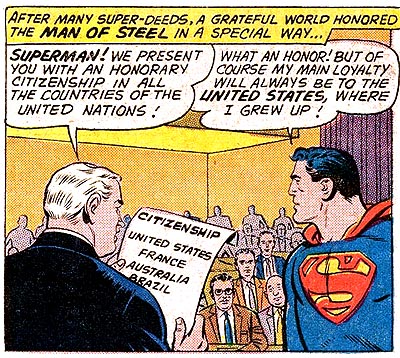
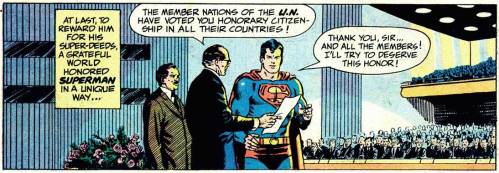


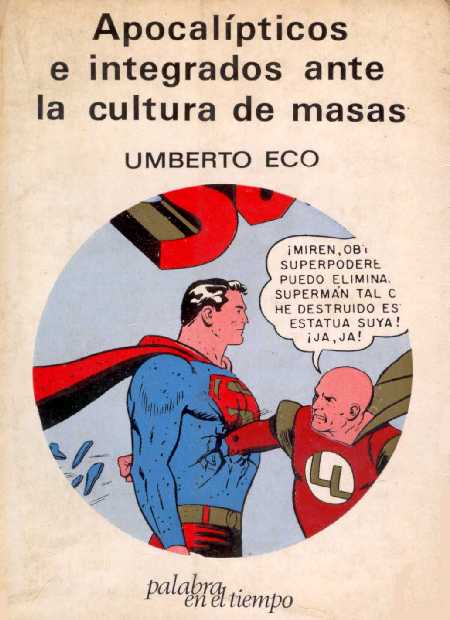













 Dr. Hugh Fox III